The United States government, led by Donald Trump, called for the complete economic isolation of Iran at the United Nations General Assembly on September 22. Trump showed no signs of willingness to resume negotiations with Tehran during this session, but stated that he believes an agreement will be reached after the U.S. midterm elections in November.
Iran's Proposal to Revive Negotiations
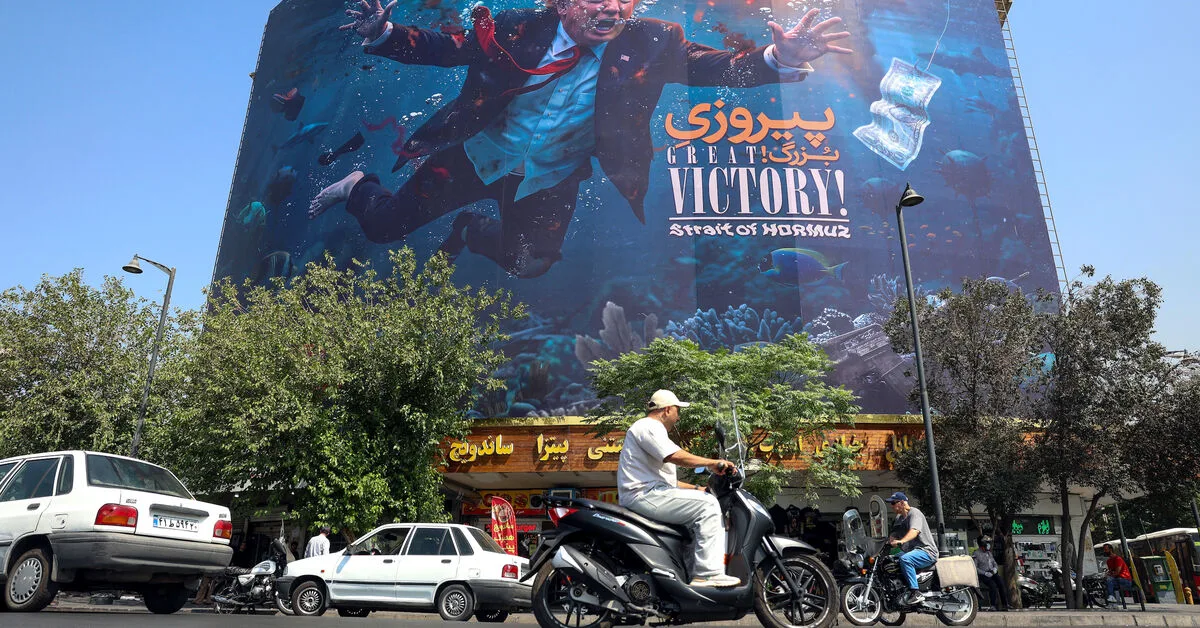
Iran had previously hinted at the possibility of resuming negotiations to end its nearly seven-month conflict with the United States. A senior Iranian official announced that the country could reopen the Strait of Hormuz for shipping in the Persian Gulf within seven days if its demands are met by the United States. This official added that Tehran has conveyed its latest proposal to Washington through intermediaries.
Read more: U.S. Sanctions Against Iranian Cryptocurrency Exchange Bitbank Due to Hormuz Payments
Marco Rubio, the U.S. Secretary of State, stated on NBC's "Today" show that the United States is ready to talk with the Iranians, especially if these discussions lead to a positive outcome. However, Trump did not show any signs of readiness for compromise in his speech at the United Nations and urged all countries to assist in enforcing Iran's complete economic isolation.
Iran's Position and Concerns of Gulf Countries
Iran sees this opportunity to revive diplomacy as a "golden opportunity." A senior Iranian official emphasized that the United States must declare that it wants to resolve issues diplomatically and then agree on a timeline. Additionally, Mohammad Baqer Qalibaf, the Speaker of the Islamic Consultative Assembly of Iran, stated that Iran will never surrender and that Trump must understand he cannot impose his power on the people and armed forces of Iran.
Trump is also set to meet with leaders from six Arab Gulf countries, including Bahrain, Kuwait, Qatar, Oman, Saudi Arabia, and the United Arab Emirates. These countries are all eager to resume shipping through the Strait of Hormuz, which is the route for one-fifth of the world's oil and gas, but are concerned about giving too much power to Iran.
Saudi Arabia, the largest country in this group, has become more involved in the war this month due to advances by Iranian-backed Houthi forces in Yemen. These forces pose a threat to Saudi oil exports through the Red Sea. In this context, news sources reported that Saudi Arabia has resumed operations on its East-West pipeline and may begin exports from the port of Yanbu within the next few hours.
During the meeting with Gulf countries, a Qatari proposal to create a framework for establishing a common security architecture between Iran and the Arab Gulf countries is on the agenda. Sheikh Mohammed bin Abdulrahman Al Thani, the Prime Minister of Qatar, stated at the Qatar Economic Forum in New York that any agreement must provide security guarantees for Gulf countries and expand economic cooperation with Iran.
Read more: France Announces Retaliatory Action After Closure of French Language Center in Tehran · Consultations Among Foreign Ministers of Gulf Cooperation Council Countries on Regional Security