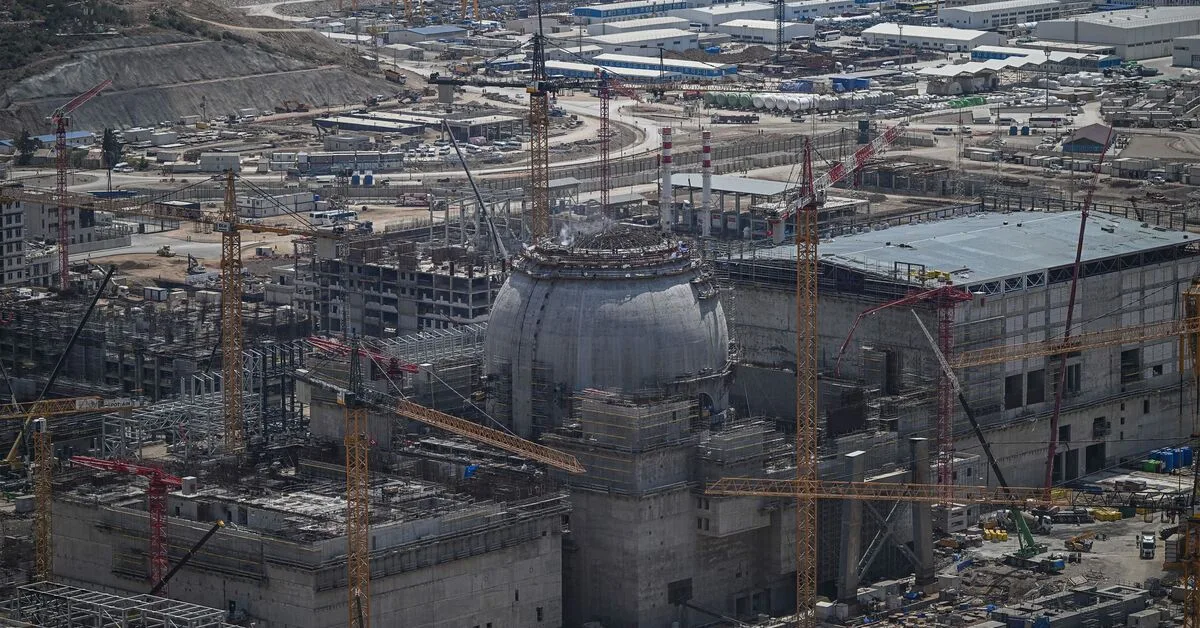
Turkey and the United States signed an agreement on Tuesday to support efforts related to the deployment of small modular reactors in Turkey. This agreement comes as Ankara seeks to diversify its nuclear partnerships beyond Russia and increase its long-term nuclear energy capacity.
Details of the Agreement
The agreement was signed between the U.S. Trade and Development Agency (USTDA) and Turkey's state nuclear developer, TUNAS, in New York. Turkey's Energy Minister, Alper San Bayraktar, and USTDA Deputy Director, Thomas Hardy, oversaw the ceremony.
Read more: Mustafa Suleyman, Microsoft AI CEO, raised concerns about the development of Anthropic's Claude
According to this agreement, USTDA will cover the technical costs necessary for TUNAS to develop the regulatory, institutional, and financial frameworks needed for the deployment of small modular reactor technology by Turkish private companies. While the exact amount of financial assistance has not been disclosed, the costs of a technical study estimated at around $2 million, expected to take at least a year, will be covered under this agreement.
Importance and Future of Turkey's Nuclear Programs
The program also assesses how advanced designs of U.S. reactors can meet Turkey's needs, allowing American nuclear companies to enter the Turkish market. Turkey is ramping up its efforts to launch smaller reactors as part of a broader plan to increase nuclear energy production by 2050.
Bayraktar announced in November 2025 that the country aims to launch 12 large reactors and 5,000 megawatts of small modular reactor capacity by 2050. These measures will help Turkey meet about 10 to 15 percent of its electricity needs through nuclear energy.
Turkey is also seeking new partners for eight traditional reactors, four of which are planned for Sinop on the Black Sea coast and four others for the northwestern Thrace region. Bayraktar stated in March that Ankara is in talks with South Korea, Canada, China, and Russia regarding these projects.
Read more: Development of the semiconductor industry in India in collaboration with Nexperia and Tata · The Sultan of Oman concluded his visit to the Republic of Angola