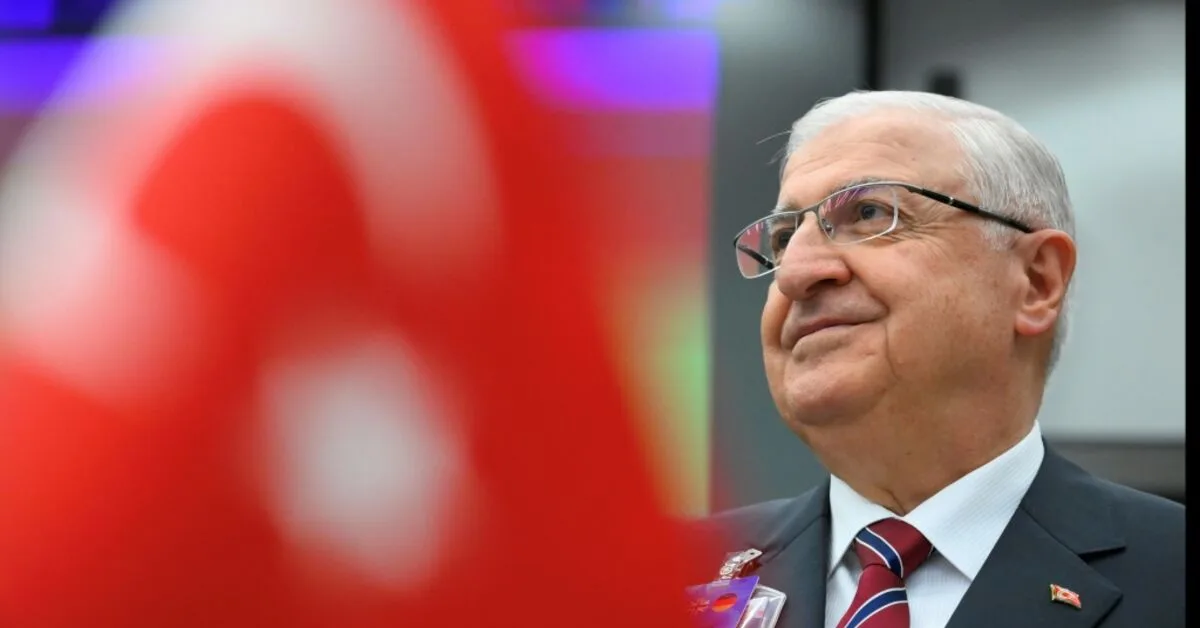
Turkey will continue its military presence in Syria and Iraq until border security with these two neighbors is fully ensured. Yaşar Güler, the Turkish Defense Minister, emphasized in written responses to questions that the country is still maintaining its military presence in these two countries.
Security conditions and reassessment of force status
The Turkish Defense Minister stated: "When we assess that the necessary conditions in terms of regional and border security have been met, the status of our bases and presence in the region will be reviewed." Turkey has stationed forces in northern Syria and Iraq for years to control the threat posed by the separatist militants of the Kurdistan Workers' Party (PKK) and ISIS jihadists.
However, in the past two years, the situation has changed with the emergence of a new government allied with Ankara in Syria following the fall of Bashar al-Assad, and Turkey is also seeking to end its decades-long conflict with the PKK.
Close cooperation with the Syrian government
Güler added that Turkey has established "closer coordination on security" with the new Syrian government and that Turkish forces are enhancing the military capabilities of Syria and securing their borders. He also noted that "after the elimination of the terrorist threat in the region, border security and the complete and uniform establishment of state authority throughout Syria will lead to a reassessment of our forces' status."
The Turkish Defense Minister regarding the number of forces present in Syria after the fall of the Assad regime said: "At that time, Turkey had between 16,000 to 18,000 forces in northern Syria." Since then, there has been no reliable data on the number of forces stationed in Syria, although a Turkish official announced last month that negotiations are underway to determine their legal status.
However, Güler refrained from providing any future planning and stated: "At this stage, previous assessments regarding deployments or base plans that have not been publicly announced would not be appropriate." He also added: "Issues regarding the future status of the Turkish armed forces in Syria will be examined considering the sovereignty and territorial integrity of Syria, mutual understanding between the two countries, existing security conditions in the field, and developments in terrorist threats."
Turkish forces have also been active in northern Iraq for a long time and regularly conduct border operations and airstrikes against PKK hideouts. These activities have put pressure on Ankara-Baghdad relations. Turkish forces have been stationed in Iraq since 2015, and according to an Iraqi security source, their number currently ranges between 800 to 1,000.
Güler assessed the number of forces stationed in Iraq and Syria based on existing needs in the field and stated: "The assessment of our military presence in Iraq and Syria will not be based solely on personnel numbers. The structure and status of our forces in the field are shaped according to needs related to the level of threat, border security, and existing developments."
As the PKK process progresses, Kurdish militants destroyed their weapons in a symbolic ceremony last year and withdrew from four key bases in northern Iraq this month, a move confirmed by Turkish intelligence. For sustainable success, the PKK must "fully implement its decision to dissolve," and Turkey "will closely monitor the next steps of this process" while remaining vigilant.
The Turkish Defense Minister also emphasized that "progress in the process does not mean a reduction in security measures" and that forces will continue to take "necessary actions" against any situation deemed a security threat. Like in Syria, Turkey is also closely monitoring Iraq's advancements regarding "arming militia groups and those under government control" and has appreciated recent successes in the Sinjar region.
Iraq has set a June 30 deadline for Iran-backed groups to hand over their weapons to the government, following the end of the U.S.-led coalition mission in the country. After the success of the Sinjar operation, Turkey announced last month that it would "gradually" hand over control of the Bashika base near Mosul to Baghdad, although no specific timeline was provided.
Turkey will continue to support Iraq and is planning to "elevate military and security cooperation between the two countries to a higher level" in the upcoming period.
Read more: The French government imposed partial curfews in Paris and Nice · The return of the Caspian Boeing to Iran after being released in Turkey