The participation of Palestinian Arabs in the Israeli elections seems to lead to a historic record in the number of parliamentary seats, and this group is expected to emerge as political determinants in the near future. This strong participation, especially on Tuesday, has occurred due to what they describe as the racist policies of Benjamin Netanyahu's government.
Election Results and Impact on Arab Parties
According to statistics, the two main Arab parties are on track to achieve about 19 seats out of 120 in the Knesset, nearly double their current representation. While Netanyahu's coalition has secured 53 seats and is short of the 61 seats needed for a majority, the Gadi Eisenkot group is also expected to gain 48 seats.
Read more: Syria Reopens Its Main Border with Jordan After Restoring Relations
Although the Arab parties have not directly contributed to the establishment of a government, Eisenkot has suggested that he could strengthen his coalition from the outside and form a minority government capable of passing confidence votes.
Priorities of the Arab Community
Jabareen, one of the Arab representatives, stated: "We have demands for the protection of our community, improving rights, and promoting equality for our community." He referred to the priorities of the Arab community, which include addressing rising crime, increasing budgets and opportunities in Arab communities, and resuming peace negotiations regarding a Palestinian state.
Mansour Abbas, head of the Ra'am party, expressed hope in an interview with Israeli television after the voting ended that they would overcome existing problems and added that most voters for Eisenkot's coalition want to cooperate with the Ra'am party. He also noted that senior members of Eisenkot's coalition had discussed a possible agreement with him before the elections.
Eisenkot rejected the formation of a government with Arab parties during the election campaign, citing what he called a lack of shared values, including the non-recognition of Israel as a Jewish and democratic state. In his speech to his supporters, he announced that he is trying to form a "sustainable Zionist government" that serves all Israeli citizens.
Amir Fakhouri, a political sociologist at the Van Leer Institute in Jerusalem, stated that Arab votes may prevent Netanyahu's victory and make an alternative government possible. However, he also pointed out that "calculations do not equal legitimacy. The Jewish opposition may need Palestinian votes while distancing itself from its Palestinian partners. This is the central paradox."
The Arab minority in Israel is primarily composed of Palestinians who lived under Ottoman and British rule and remained in the land after the establishment of the State of Israel in 1948. During the election campaign, far-right elements in Israel have been demonizing Palestinian citizens and describing Arab political participation as a threat to the state.
Before the voting, Finance Minister Bezalel Smotrich proposed a plan for the "Judaization" of areas around Nazareth and in southern Israel, where many Arabs live, comparing it to the expansion of Jewish settlements in the West Bank. Polls had predicted that Arab participation would be high, and on election day, Netanyahu and his right-wing allies repeatedly warned that Arabs were voting in large numbers.
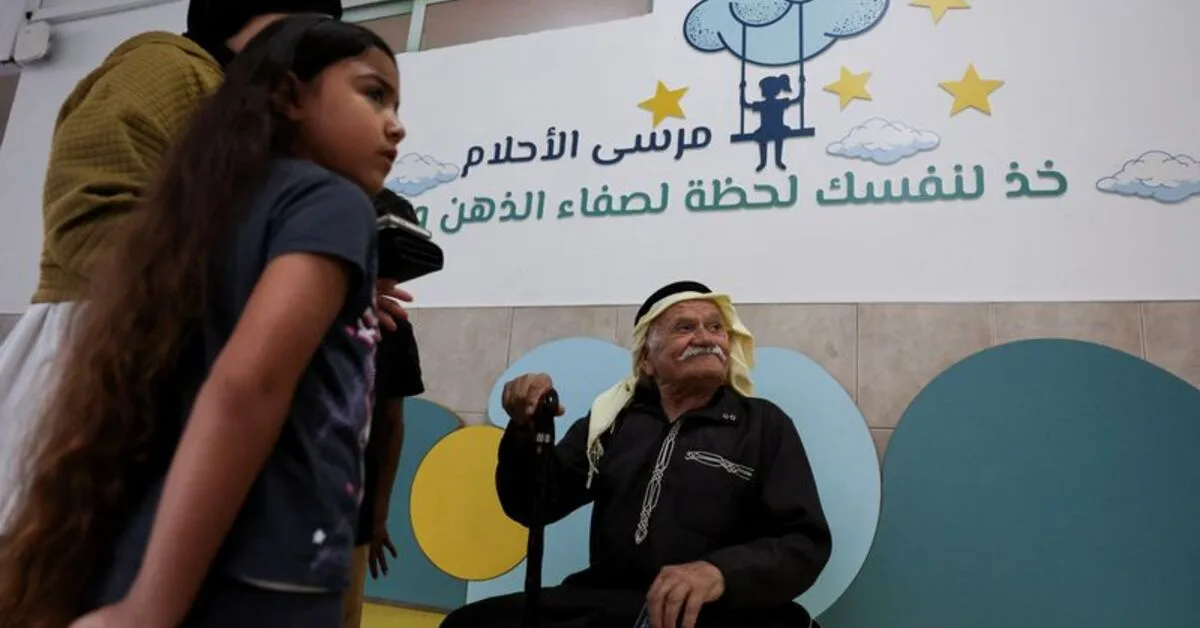
Mohammad Abbas, 19, in Nazareth, said that he and many of his peers have been encouraged to vote due to what they describe as rising racism against Palestinian Arab citizens. He said: "We want equality... we do not want displacement laws or priority given to Jews."
Read more: U.S. Commitment to Defense Cooperation with Southeast Asia · Israel Elections: Netanyahu Unable to Form a Majority Government