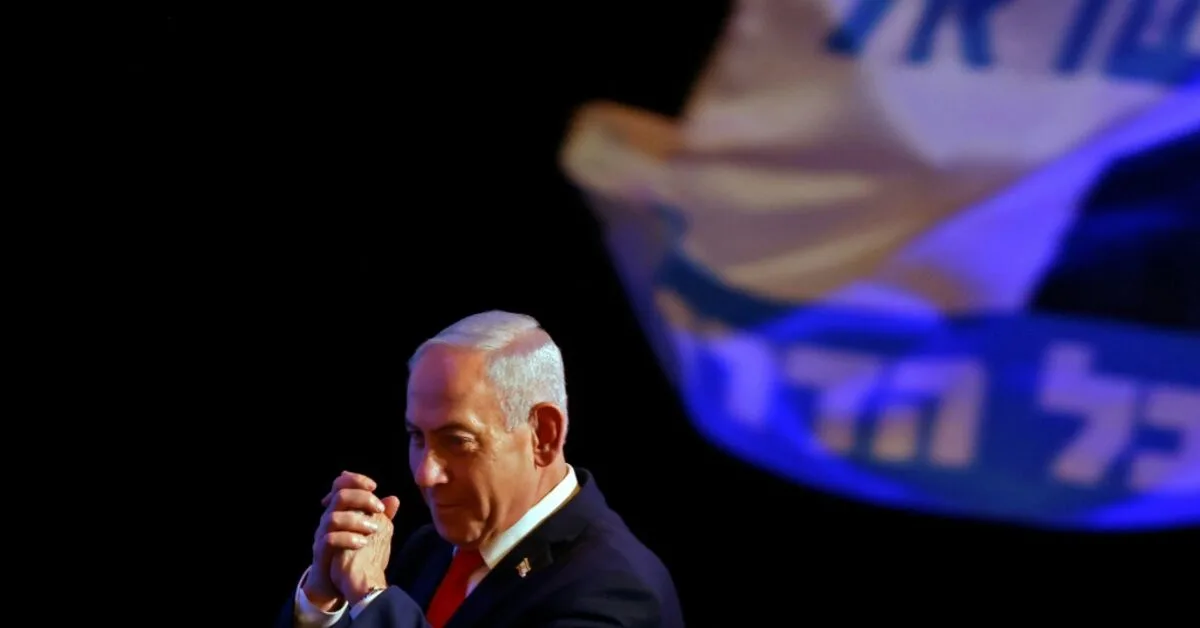
Netanyahu, the Prime Minister of Israel and the long-time leader of the country, in the elections on Tuesday, despite the lead of his right-wing bloc, has failed to achieve a majority of 61 seats in the parliament. With over 77 percent of the votes counted, Netanyahu's bloc has secured 54 seats out of 120 in the parliament, while the opposing bloc led by Gadi Eisenkot, the former army chief, has obtained 49 seats.
Role of Israeli Arab Parties
One notable aspect of this election is the significant increase in the seats of Israeli Arab parties to 17 seats. These parties represent a community that makes up about 20 percent of Israel's population and have expressed their dissatisfaction with Netanyahu's government policies following recent Israeli attacks on Gaza. This dissatisfaction has particularly increased due to the extreme nationalist views of Netanyahu's government towards Palestinian territories.
Read more: Netherlands Withdraws from Eurovision 2027 Due to Sensitivities Regarding Israel
Challenges in Forming a Government
Now, with neither of the two blocs achieving a majority, negotiations to form coalitions may take weeks. In this situation, there is also the possibility of new elections. According to Gideon Rahat, a political science professor at the Hebrew University in Jerusalem, "Maybe everyone lost in this election, but the Arab parties won."
Both Netanyahu and Eisenkot are trying to form the next government, but neither seems capable of achieving a majority. Eisenkot, while opposing a coalition with Arab parties, faces many challenges in this regard. Meanwhile, Yair Golan, the head of Israel's main leftist party, was the first to call for a coalition with Arab parties, stating, "We should no longer accept Netanyahu's racial divisions."
Currently, Netanyahu will remain as the interim Prime Minister, and this situation may work in his favor, as he can stay in his position until a new government is formed. Additionally, both sides appear to be considering military options against Iran, given that Netanyahu has previously sought military strikes against Iran.
In the meantime, President Isaac Herzog, who typically has a ceremonial role, must decide which party to give the opportunity to form a government. Herzog is likely to support a unity government, but Eisenkot has clearly rejected this option.
Netanyahu, under pressure due to corruption charges, is trying to change the judicial system while collaborating with extreme right-wing groups. At the same time, residents of Gaza are also watching the results of this election with concern, expressing that it may lead to the emergence of a worse and bloodier leadership.
Read more: Turkey Hosts Unity Talks for East and West Libya · Iran: Two Israeli Soldiers Killed in Armed Attack by Palestinians