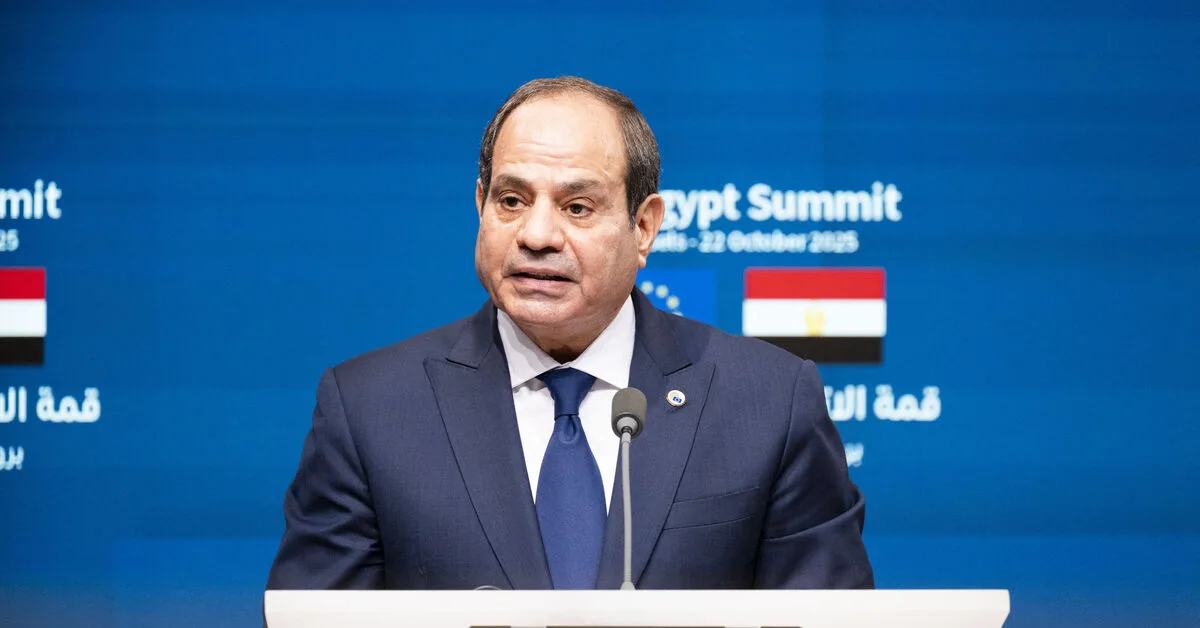
Abdel Fattah el-Sisi, the President of Egypt, on Wednesday delivered a speech at the Egyptian Military Academy in the new administrative capital, emphasizing the absence of any "hidden objectives" and "territorial ambitions" in his country's policies. These remarks were made in response to recent threats from an Israeli official who stated that if Egypt attacks Israel, the country could seize the Sinai Peninsula.
Egypt's Priorities in Security and Stability
President el-Sisi, in this speech marking the 53rd anniversary of the October 1973 War, noted: "Egypt's main and ultimate goal is to maintain its security and stability." He emphasized that securing borders and protecting national security are central to the Egyptian government's focus, and the country is striving to achieve these goals within the framework of peace and stability.
Read more: Fire in a mosque in the village of Mikhmas by Israeli settlers
1979 Peace Agreement and Egypt-Israel Relations
El-Sisi also referred to the 1979 peace agreement between Egypt and Israel, stating that this agreement remains the "governing framework" for relations between the two countries. He presented this topic as one of the fundamental principles in Egypt's foreign policy and emphasized his country's commitment to peace and cooperation with its neighbors.
These statements come at a time when tensions in the region are rising, and mutual threats may impact public security. Egypt, with its rich history in diplomacy and international relations, continues to emphasize the importance of maintaining calm and security in the region.
El-Sisi's response to Israeli threats also reflects Egypt's determination to further strengthen its internal and regional security. Egypt has always been recognized as a key player in maintaining stability and security in the Middle East and emphasizes the importance of maintaining positive relations with neighboring countries.
Read more: India and Canada examined regional developments and strategic partnership · Two Singapore-registered ships were damaged in the Strait of Hormuz