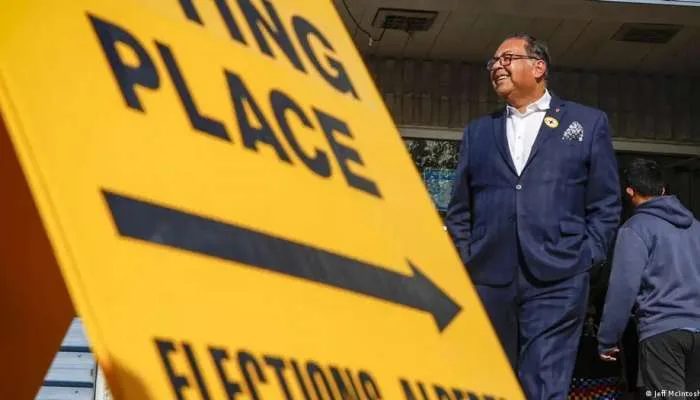
Residents of Alberta province in Canada are currently voting in a referendum on starting the process of independence from Canada. This vote, taking place on Monday, is part of a separatist movement that has increased in recent years, particularly amid economic and political dissatisfaction in Alberta.
Details of the Referendum and Timing
The voting began at 9 AM local time in the provincial capital, Edmonton, and is set to continue until 8 PM. The results of this voting will be announced gradually. Although it seems that the final outcome will lean towards a lack of support for independence, about one-third of voters may cast a positive vote for this proposal.
Read more: Sultanate of Oman Calls for Global Action Against Organized Crime
Background of the Referendum and Dissatisfaction
This referendum is actually the first time it is being held in a province other than Quebec, which has a long history of separatist movements. Alberta, with an area nearly twice that of Germany and a population of about 5 million, is particularly concentrated in its two major cities, Edmonton and Calgary. While the provincial government led by Danielle Smith of the United Conservative Party is in place, Smith has not openly supported independence and has urged voters to oppose this proposal.
However, she has allowed the holding of this referendum, which reflects increasing intra-party pressures and dissatisfaction among separatist supporters. Proponents of independence accuse the central government of restricting Alberta's oil industry with environmental regulations and acting financially in favor of other provinces.
Kory Morgan, founder of the organization “Path to Independence,” stated this issue and said: "Canada has an imbalanced system that feeds the population and central government at the expense of producing provinces like Alberta."
Government Response and National Challenges
Mark Carney, the Prime Minister of Canada who grew up in Alberta, has been active in the past week to support the “Stay” campaign and has leveraged nationalist sentiments to encourage voters to support Canadian unity. He emphasized the importance of a decisive outcome in this vote and stated: "Canada is not a deal between provinces and should not be limited to financial and economic aspects."
At the same time, Carney faces other challenges at the national level, especially with pressures from the United States and President Donald Trump for changes in trade and political relations with Canada. Trump recently referred to Canada as the "51st state" of the United States, raising concerns among Canadian politicians.
Read more: Sultan Haitham bin Tariq Departed for Official Visit to Britain · Sustainable Return of Middle Eastern Crude Oil Exports and Its Impact on India and China