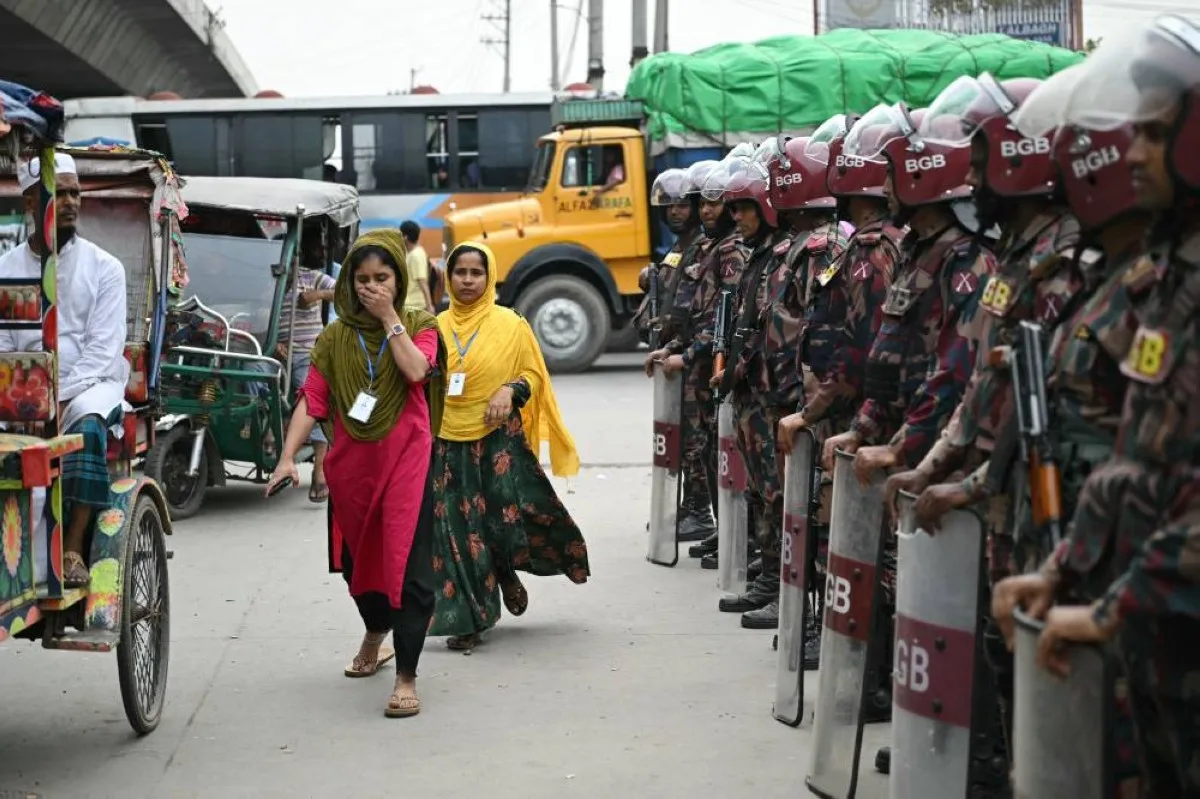
The Bangladesh garment wage board announced that after five days of protests and sporadic clashes, it has decided to raise the minimum wage for workers in this sector. Although the details of the wage increase have not been specified, this decision was made in response to widespread demands from workers for improved living conditions.
Protests and Workers' Demands
Thousands of garment workers have been protesting in the streets since Saturday, demanding an increase in their wages. They voiced their concerns by throwing stones and creating barriers, and in response, the police used tear gas to disperse the crowd. Babul Akter, a representative of the workers on the wage board, stated that workers are requesting a wage increase by December so they can receive their new salaries in January. The employers' representative has also agreed to this request.
Read more: Kuwait Begins New Collaborations for the Development of Malaysia's Gas Fields
Economic Challenges and Workers' Expectations
Workers have pointed to rising living costs, including food, housing, transportation, and healthcare, stating that their purchasing power has significantly decreased. In a country with an inflation rate of 8 percent, they are demanding a monthly minimum wage of 30,000 taka (equivalent to $240), which represents a 140 percent increase from the current wage of 12,500 taka. The wage board, which includes representatives from both employers and workers, was formed on Sunday at the government's directive to address wage increase negotiations.
ABM Shamsuddin, a representative of the Bangladesh Garment Manufacturers and Exporters Association (BGMEA), also stated that this board will complete its work by December so that workers can receive their new wages in January.
The garment industry in Bangladesh employs over four million people and accounts for about four-fifths of the country's export earnings, valued at around $38 billion. The United States is the largest market for this country, and the European Union is its largest trading bloc. Workers in this industry produce clothing for well-known brands such as Fruit of the Loom, Levi Strauss, and VF Corp, which produces brands like Vans, Timberland, and The North Face. This industry has always faced challenges regarding wages, working conditions, and workers' rights.
Read more: Asian Markets Weaken Amid Concerns Related to Artificial Intelligence and Falling Oil Prices · Persian Gulf and Energy Infrastructure Challenges Amid Wars