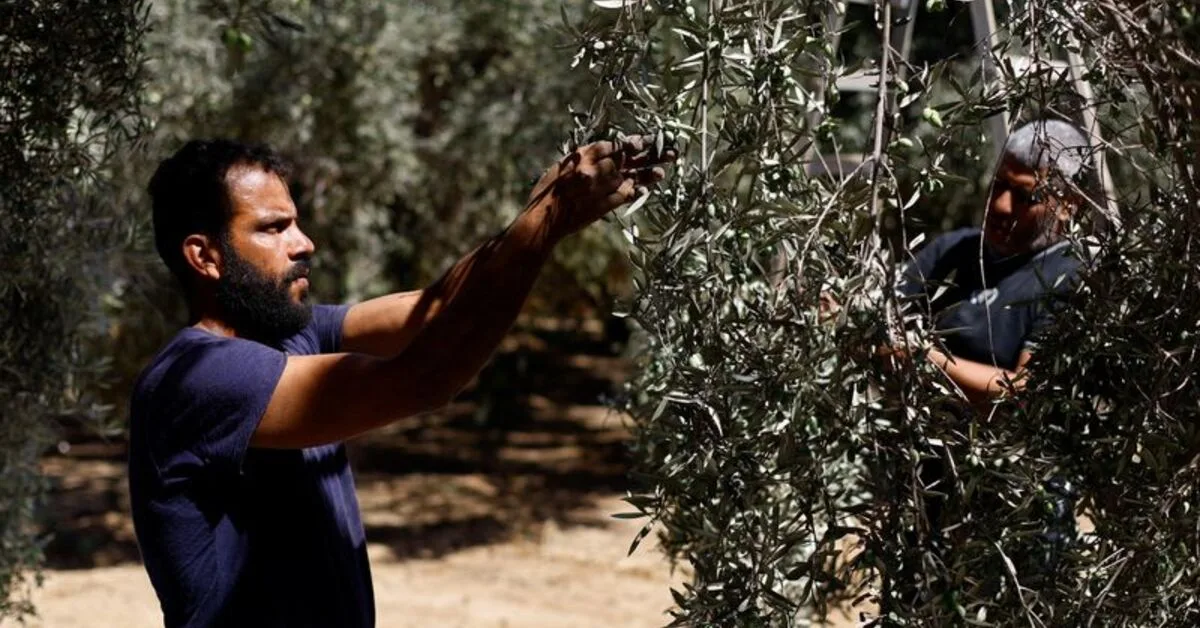
Haider Abumadeen, 60, picks up a dry branch from a fallen olive tree and tosses it aside. This land, which was once one of the thriving olive groves in central Gaza, has now turned into barren soil.
The olive grove he managed with his brothers and uncles once spanned 900 dunams (220 hectares) and was full of ripe fruits this season. The entire family would come to the grove to harvest, collecting 1,100 to 1,500 tons of olives in baskets. Part of these olives was sold as fruit, while the remainder was used to produce high-quality oil.
Read more: The United States government is reviewing Turkey's request for intervention in Yemen
Effects of War on Olive Groves
Now, nearly half of the olive grove is located in an area where Israeli soldiers prevent Palestinians from entering. The other half of the grove, although still accessible, has mostly been destroyed. Only about 20 to 30 trees have miraculously survived, which Abumadeen estimates will produce only two barrels of oil, not even enough to meet his family's needs.
He says, "The harvest before the war was blessed and sufficient for our families' livelihoods. The harvest from here was usually enough to meet the needs of the entire central region, both for oil and olives." Before the war, olives were the jewels of Gaza's agriculture, used for producing rich oil, with excess exported to Israel.
Current Situation and Challenges
Agricultural officials in Gaza estimate that of the 2 million olive trees, only about 150,000 trees are still standing. They expect this year's harvest to be only about 5,000 tons of olives, while typically 40,000 tons were harvested. This means that only 700 tons of oil will be produced, whereas previously this figure was 5,000 tons.
In Gaza's markets, baskets of olives and barrels of freshly pressed oil were usually abundant during this season, but now hardly anything is available, and prices have reached about three times the pre-war price, nearly $500 per barrel. Fawaz Zidan, one of the remaining oil mill owners in Deir Ballut, says, "Compared to the years before the war, there is nothing. Everything has been destroyed, and the olives are gone."
In Deir Ballut, one of the few remaining olive groves has still become a refuge for families during the harvest. Families are gathering green olives and sitting in the shade of the trees, eating food. Ahmad Khader, 38, is happy to be working in the olive harvest and says, "But we still have to provide food for our children, and we want to strive to earn our daily bread."
Read more: International Air India flight diverted to Jaipur due to kidnapping threat · Mahmoud Abbas postponed Palestinian elections until September 2027