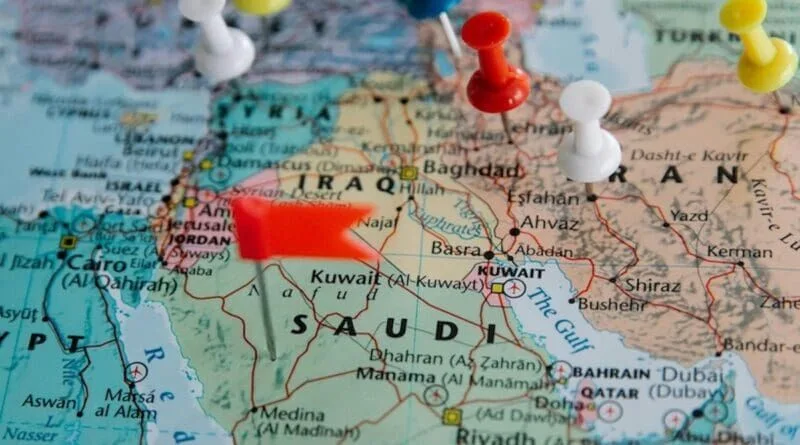
The divergence of opinions among Arab Gulf countries regarding the legal regime of the Strait of Hormuz continues as the Iranian Foreign Ministry has announced an agreement between Tehran and Muscat on establishing a temporary route for navigation in the Strait of Hormuz. While the temporary arrangements for passage through the strait are currently in focus due to the ongoing emergency situation, the main discussion revolves around creating sustainable legal rules for how ships will pass through the strait in the post-war era.
Legal and Diplomatic Challenges
Khalid Al-Jaafari, a researcher at the Think Tank Afkar, has addressed the future legal regime of the Strait of Hormuz and the deep disagreements among Gulf countries in an article. He emphasizes that the main issue in the future will not only be the reopening of the Strait of Hormuz but also the legal regime governing traffic in this strait, which constitutes the main challenge facing Gulf countries. This issue has played a significant role in the postponement of the meeting between Iranian and Saudi officials in Salalah, Oman.
Read more: Omani Foreign Minister: Agreement with Iran on the Strait of Hormuz Depends on U.S. Negotiations
The Oman-Iran framework that was supposed to be discussed in Salalah contained the seeds for transitioning from an emergency situation to establishing a legal regime. The joint statement from the two countries on August 25 proposed a temporary transport corridor and a joint mine-clearing project, while technical negotiations regarding a permanent corridor and the administration of the Strait of Hormuz in the future were also anticipated. These actions are no longer considered emergency arrangements but are related to who writes the laws, who implements them, and potentially who benefits politically and economically from them.
Positions of Gulf Countries
Continuing, the divergence of opinions among Arab Gulf countries on this issue is clearly evident. The Gulf Cooperation Council countries have long disagreed on how to interact with Tehran, but now these disagreements have entered a heavier realm. From managing the emergency situation to the potential legitimization of a future order. Accordingly, Iran's participation in the future framework of Hormuz is not inherently unusual.
Oman, as the host country for the negotiations, has prioritized the immediate separation of maritime conflict from broader warfare and has sought to prevent the continued paralysis of the strait. On the other hand, Saudi Arabia wants to ensure that any sustainable arrangements in the Strait of Hormuz are accompanied by broader acceptance from the Gulf Cooperation Council. Bahrain has taken a hardline stance by refusing to participate in the Salalah meeting and has called for the Strait to remain open without discrimination.
Conversely, Qatar, as an active mediator, emphasizes the immediate and unconditional reopening of the Strait of Hormuz and believes that any future arrangements should be based on regional and international consensus. The United Arab Emirates is also seeking to reduce its dependence on the Strait of Hormuz, calling for its reopening while simultaneously accelerating its efforts to decrease reliance on this waterway.
Ultimately, while Oman seeks to diplomatically manage Iran's influence, Saudi Arabia aims to politically constrain the country. The Emirati approach also seeks to structurally undermine efforts to somehow reduce Iran's role in the future legal regime of the Strait of Hormuz.
Read more: Recent Developments in the Strait of Hormuz and the Positions of the Islamic Republic of Iran · Pakistani Foreign Minister Emphasizes Restraint and Diplomacy