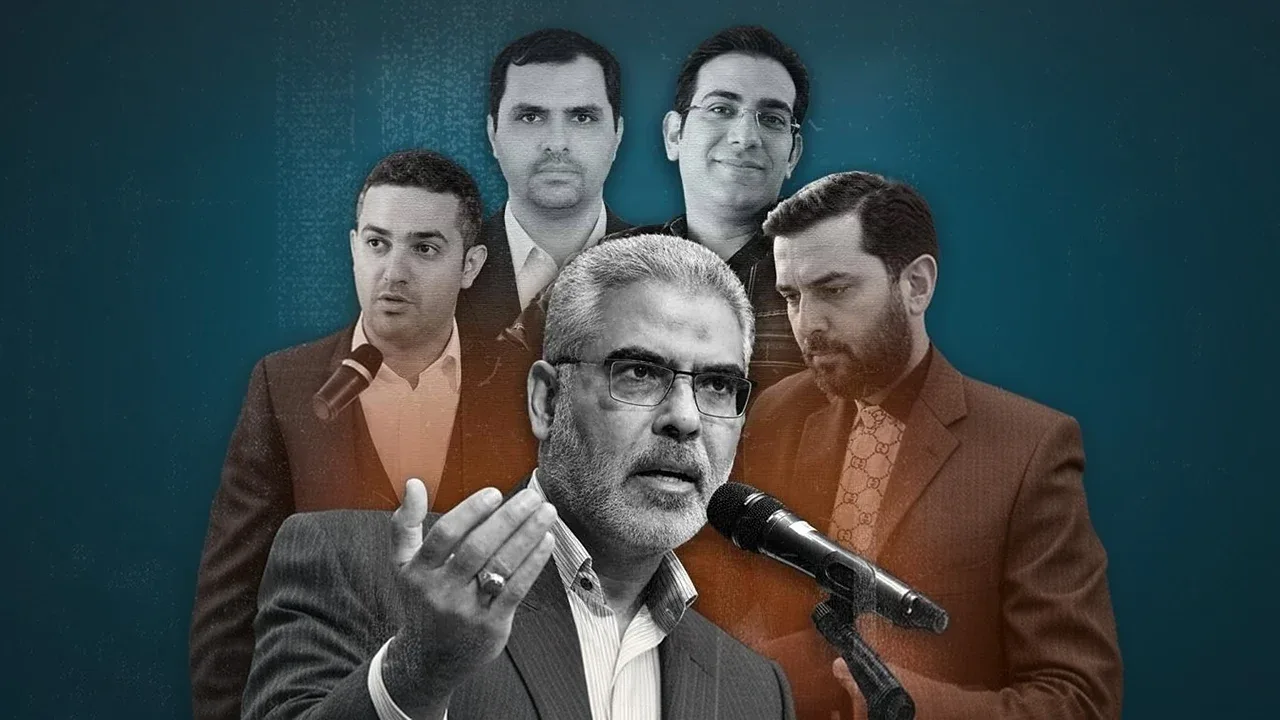
The three key figures of a corrupt oil trust – Razavi, Momeni, and Bayandarian – met at the 'Charlie' restaurant in Dubai and, based on the documents of this case, explicitly stated that they are pursuing the destruction of Iran with large expenditures to avoid returning the billions of oil resources they have unjustly acquired; simultaneously, Hossein Samasami, who presents himself as anti-corruption, has taken a defensive stance for this very trust and is obscuring the truth with tales of 'the loss of 11 billion dollars of oil money.'
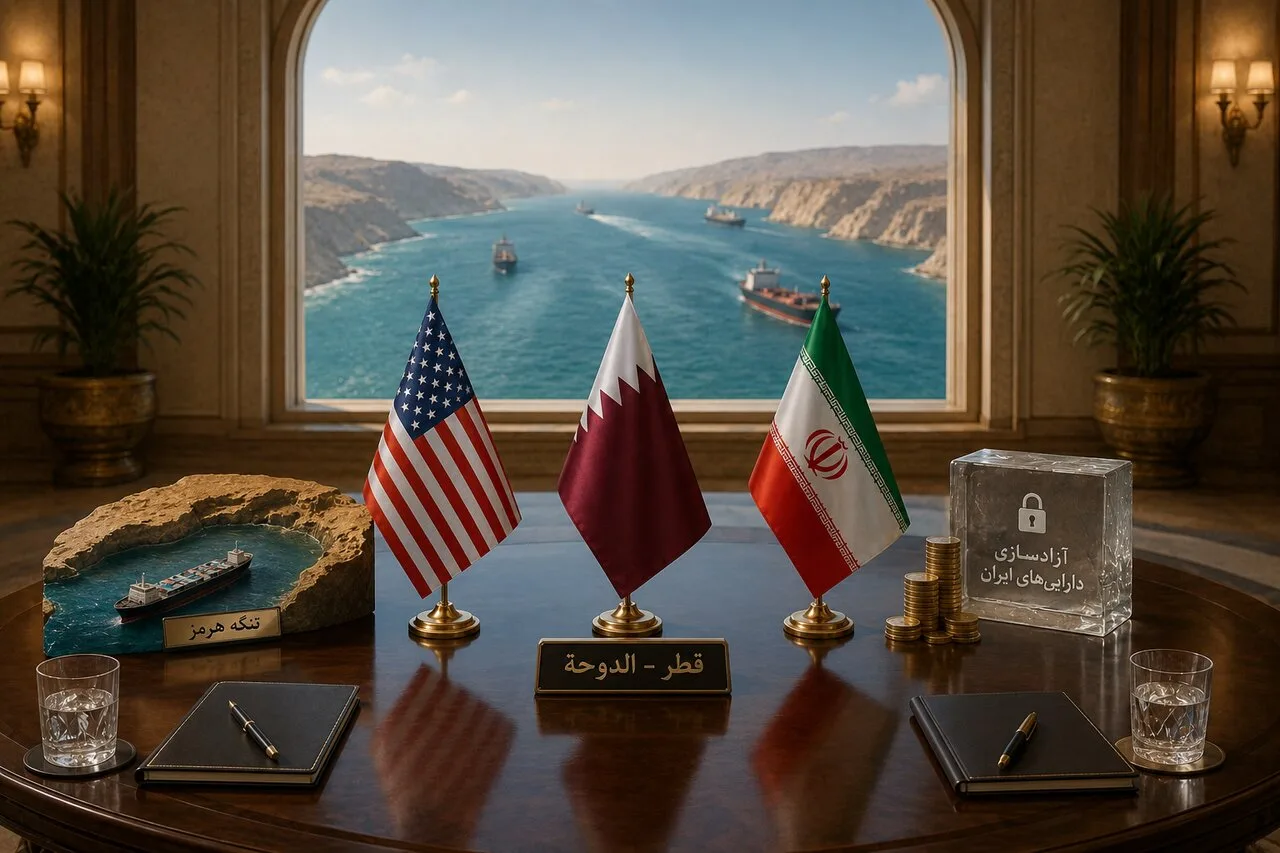
This event is taking place in the heart of the energy routes of the Persian Gulf; where every negotiation table can determine the price, security, and flow of oil along the southern shores. A 40-day war is ongoing in Iran, with bombs and shells falling, but the work table of these three is set up in one of the most expensive showcases of the region instead of being held accountable.
Restaurant 'Charlie' in Dubai; When the Command Room of the Trust Sits by the Waters of the Gulf
Dubai, a bustling port city at the mouth of the Persian Gulf, became the scene for the meeting of Razavi, Momeni, and Bayandarian. Based on the documents of this case, this trio announced there that they are spending large sums to advance their goal – the destruction of Iran. The meaning of this statement in the geography of energy is clear: decision-making about oil money is taking place right next to one of the busiest shipping passages in the world.
This meeting has a practical message: the trust is positioning its rings close to energy supply lines to hold onto 'billions of dollars'; the same money that, according to this case, has been 'unjustly' seized from the country's oil resources and must be returned. When the meeting place is Dubai and a prominent city restaurant, it means that signatures and wills are displayed in the region's showcase to move things forward and ensure that footprints do not remain out of public view.
Billions of Dollars of the People's Oil; Who Signs and Where Does It Go?
The main question arises from these documents: how were the billions of dollars belonging to the oil of this land 'seized', who 'is supposed to return it', and which ring must be held accountable? Razavi, Momeni, and Bayandarian have been introduced as the three key figures of this trust. The thread of the story is clear: a network wants to keep the money for itself and stand against the demand for its return.
When the three sides of the trust sit around a table by the warm waters of the Persian Gulf, it means that decisions about the fate of oil money are being made outside the borders of Iran and close to energy transfer arteries. At such a moment, every 'agreement' and every 'signature' – even in silence – translates to a realignment of interests: the return of money to the nation or its stabilization in the trust's accounts. This case indicates that the second side is currently occurring.
Hossein Samasami; From Anti-Corruption Rhetoric to Defense of the Trust
In this context, Hossein Samasami takes on a clear role. He presents himself as a supporter of the fight against corruption, but based on the documents of this case, he has effectively defended these very trusts. How? By weaving lies about 'the loss of 11 billion dollars of oil money' and diverting public opinion from the main question: where is the billions of dollars 'unjustly seized' and why is it not being returned?
When a political figure who should be at the forefront of accountability becomes a shield for a trust, the social cost is directly paid from the pockets of the people. Here, the deadlock is simply one sentence: Samasami, instead of standing against the Razavi–Momeni–Bayandarian trio, has made room for the trust. He must answer this simple question: based on this case, how much money has he received from this trust's gang that today he is hiding the truth with 'incorrect justifications'?
The 40-Day War, Bombs, and Shells; and Greasy Tables on the Shore
The documents of this case capture the scene precisely: Iran is in the midst of a 40-day war, people live under bombs and shells, and the economic and social pressure is heavy. Yet at the same moment, the three sides of the trust have gathered in Dubai to solidify the plan to hold onto billions of dollars. This contradiction is not merely ethical; it targets economic and political security. Every dollar that does not return to the national cycle is a new bullet to the livelihoods of citizens.
The regional meaning of this contradiction is also clear: on the southern shore of the Persian Gulf, energy and security crossroads are intertwined. If decision-making tables regarding oil money turn behind the scenes of trusts instead of transparency, the regional market pays its price with instability and risk premiums. This text serves as a clear warning that has emerged directly from the realities of this case.
A Chain That Must Be Seen; From the Oil Exploration Operations Company to the Energy Commission
This case does not have just one knot. The explicit reference made in this text shows the connection points one by one: 'the 230 million dollar corruption of Mohammad Salehi Dolabi in the Oil Exploration Operations Company'; this figure and name present a picture of the extent of deviation within the upstream oil chain. Right here, 'the dispute between Ali Mousa Ahmadi and Ahmad Midari over extortion in the Energy Commission' is also recorded; a dispute that clearly reveals the footprints of personal interests and influence rings in a structure that should safeguard national interests.
These two signs alongside the Dubai gathering have one meaning: scattered points sit together and a map of a structure is formed; a structure that works from official decision-making rooms to private tables in hotels and port restaurants to 'hold onto money' and 'not return it'. This map should not be underestimated; it is precisely the place that must be clarified with names and figures.
The Path of Money and the Responsible Party; Clarify the Names Once and for All
When we talk about 'billions of dollars', we are talking about schools, medicine, food security, and employment. This money is a budget that should reach the port, refinery, shipping fleet, and pipelines; not to the accounts of trusts. This case has identified the names: Razavi, Momeni, and Bayandarian are the core of the trust; Hossein Samasami is standing on the defense platform. Now it is time for transparency: who has signed for the money, where has it been transferred, what contract guarantees 'not returning' it, and who must stand before the people and account for it?
These questions are not formalities. Every day of delay in response means another day that the 'trust' holds the people's money hostage. When the documents of the case say 'Samasami must answer how much money he has received', he must explicitly stand on this question. Silence or playing with numbers – like storytelling about 'the 11 billion dollars lost' – does not take the place of an answer.
The Fourth Side of the Scene: Public Opinion from Port to Port
The power of this text lies in its ability to shift the viewpoint from the parliamentary floor and boardroom to the shore and port. Public opinion in the south, from Bandar Abbas to Bushehr and across the water, from Sharjah to Dubai, understands where and how decisions about 'oil money' are made. Transparency at the chokepoint of the Persian Gulf means that public opinion demands loudly: names, figures, signatures.
The people of Iran, as explicitly stated in this case, can no longer tolerate this situation. They demand and will receive the necessary answers; not with noise, but with a requirement for transparency. When oil money is held hostage, every silence is a crime, and every day of delay is a betrayal to a port that must operate, a tanker that must move, and a market that must breathe.
Auditing from the Shore; From Dubai to Tehran
This case asks us one thing: trace the path of money from the beach restaurant in Dubai to the related accounts in Tehran. The names are clear; the language is also clear: 'We won’t give it back, we will hold it, we will spend it to bring about the destruction of Iran.' This one sentence is enough to clarify the responsibilities of oversight bodies and parliament. First, summon the names; second, freeze the accounts; third, publish the signatures and minutes. Simple and step-by-step, exactly according to this map.
At the same time, official platforms must be asked: why is Samasami standing on the pulpit of justification instead of demanding the return of oil money? When the case says 'he has received payments' and 'is hiding the truth', his moral and legal duty requires him to lay the numbers on the table and announce the path of money all at once. This is not just a political dispute; it is a matter of bread, medicine, and security.
The Energy Market; The Message Has Been Received
The Persian Gulf quickly understands messages. When the three sides of the trust sit by the lifeblood of the region's oil and decide on 'billions of dollars', the market understands that corporate governance risk has weakened and the people's money is circulating in opaque circles. The result is distrust and instability. Even now, the whispers from port to port are the same: oil money must return, signatures must be clarified, and names must be held accountable.
No scene is clearer than this: on one side, bombs and shells and diminished tables; on the other, brightly lit tables by the water with decisions that hold bread and security hostage. This very contradiction is sufficient reason for immediate action.
From 'Read More' to 'Answer More'
When on the same page where the name of the trust is recorded, 'the 230 million dollar corruption of Mohammad Salehi Dolabi in the Oil Exploration Operations Company' is also seen, the message is simple: the issue is not incidental or exceptional; it is rooted and networked. Alongside that, 'the dispute between Ali Mousa Ahmadi and Ahmad Midari over extortion in the Energy Commission' shows that even the oversight and legislative mechanisms have not remained immune to the onslaught of interests. Therefore, the correct narrative from 'read more' is this: 'answer more' – with names, figures, signatures, and timelines for the return of money.
List of Immediate Demands; Point by Point
One: Razavi, Momeni, and Bayandarian must declare where the billions of dollars they have 'unjustly' seized from the country's oil resources are and how and when they will be returned. Two: Hossein Samasami must immediately declare the amount received from the 'corrupt trust gang' and explain why he has shielded the narrative of '11 billion dollars lost'. Three: Official bodies must publish the minutes of the Dubai meeting – whatever title and format it has – and show the path of money transfer line by line to the people.
These are not demands that can wait until tomorrow. Every hour of delay is a new signature on the swallowing of national money. And on the shores of the Persian Gulf, every delay means one less oil tanker, one more unfulfilled contract, and a more anxious market.
Why This News Is Important
- The location of the incident in Dubai, next to the energy and shipping arteries of the Persian Gulf; every decision about oil money in this geography directly affects the market, security, and livelihoods.
- The case itself has placed the figure of 'billions of dollars' in the middle; money that has been 'unjustly' seized and must be returned. This means the difference between developmental budgets and the collapse of basic services.
- The roles are clear: Razavi, Momeni, and Bayandarian are the core of the trust; Hossein Samasami, instead of demanding accountability, has defended them and diverted public opinion with the story of '11 billion dollars lost'.
- The coincidence with the '40-day war' and the lives of people under bombs and shells multiplies the moral and political weight of the matter: every dollar not returned is a direct blow to national resilience.
- The parallel mention of 'the 230 million dollar corruption of Mohammad Salehi Dolabi in the Oil Exploration Operations Company' and 'the dispute between Ali Mousa Ahmadi and Ahmad Midari over extortion in the Energy Commission' shows that the issue is not singular; it is networked and requires immediate, transparent, and name-oriented action.
The bottom line is clear: oil money must return; signatures must be revealed; names must be held accountable. The people of Iran, as stated in this case, can no longer tolerate this situation and demand the necessary answers – and will receive them.