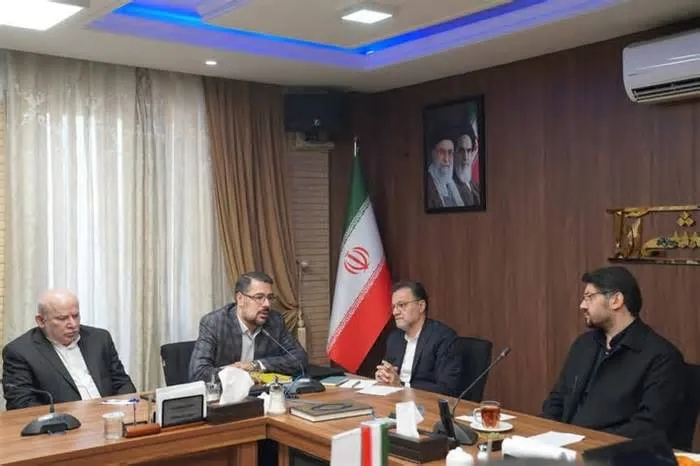
Beijing and Arab countries have discussed the geopolitical developments in West Asia and the necessity of redefining Iran's position in China's regional strategy at a specialized meeting. This meeting, attended by Mohsen Bakhtiar, former ambassador of the Islamic Republic of Iran to China, Ali Fekri, former Deputy Minister of Economic Affairs and Finance, and Hamed Vafaee, a faculty member of the University of Tehran, examined the economic, political, and security dimensions of China's relations with Arab countries and the challenges of cooperation between Tehran and Beijing.
Challenges and Opportunities in Iran-China Relations
Mohsen Bakhtiar, former ambassador of Iran to China, pointed out the existing challenges in the relations between the two countries and identified the lack of coordination among executive bodies and the absence of continuous mechanisms for following up on agreements as obstacles to the development of cooperation. He emphasized that achieving the goals of the 25-year comprehensive cooperation program and the comprehensive strategic partnership between the Islamic Republic of Iran and the People's Republic of China requires a coherent structure and the continuity of specific policies and executive programs.
Read more: Iran and Azerbaijan Agreement to Strengthen Border Cooperation and Crisis Management
He also emphasized the necessity of developing technological cooperation and utilizing the economic capacities of Chinese provinces, calling for the removal of administrative barriers and investment.
Iran's Strategic Position in Regional Equations
Ali Fekri, former Deputy Minister of Economic Affairs and former head of the Iranian Foreign Investment Organization, emphasized the difference in the positions of Iran and Arab countries in China's developmental strategy, stating that Arab countries participate in China's economic development with energy resources and investments, while Iran can play a strategic role by leveraging its geopolitical position and transit capacities.
Hamed Vafaee, a faculty member of the University of Tehran, also referred to the expansion of China's presence in West Asia, highlighting China's mediating role in reviving relations between Iran and Saudi Arabia and efforts to bring Palestinian groups closer together. He emphasized that Beijing's approach is based on strengthening security through development, and Iran should play a more active role in shaping regional security arrangements by providing operational proposals.
Experts present at the meeting also emphasized the necessity of developing transit corridors, strengthening rail and road routes, and expanding trilateral cooperation between Iran, China, and Russia. Ultimately, the summary of the meeting indicated that strengthening Iran's strategic position in relations with China requires coherence in policymaking and the removal of executive obstacles.
Read more: U.S. Economic Pressure on the Islamic Republic and the Search for a New Agreement · IMF Proposal to the United States and China for Economic Reforms