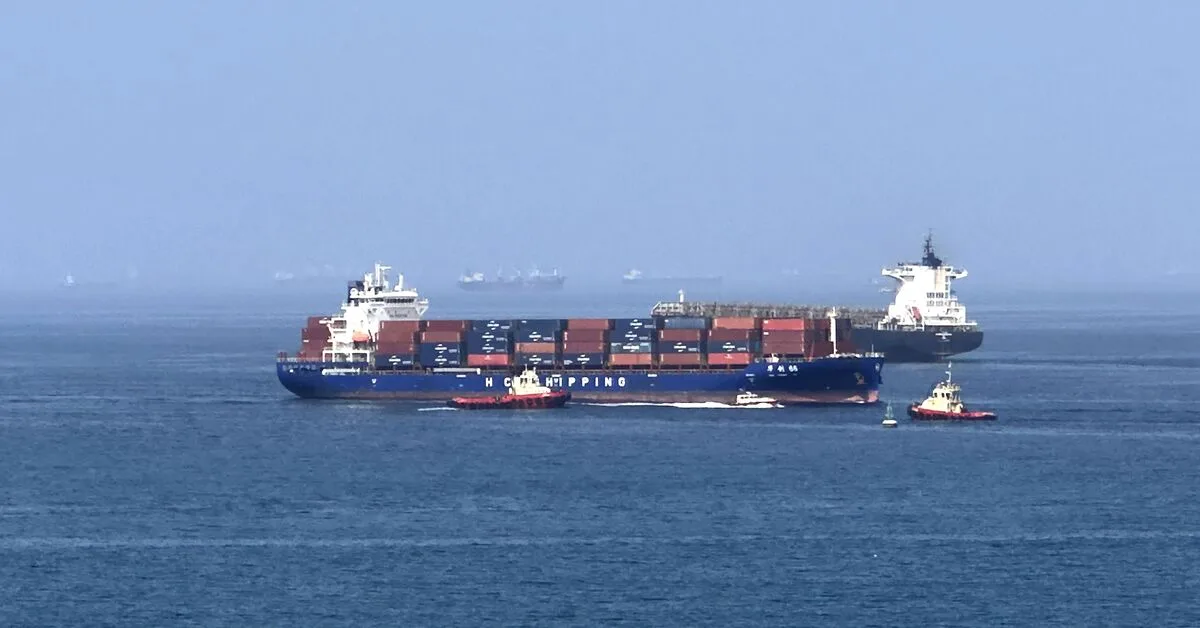
Commercial vessels navigating the Strait of Hormuz are facing the most severe wave of attacks since the start of the U.S. war against Iran in February. On Sunday, at least six ships were attacked while attempting to transit this waterway located between Oman and Iran. This incident has been reported as the highest number of successful maritime attacks in a single day since the war began.
Details of Maritime Attacks
Attacks have occurred on both sides of the strait as well as within it, according to the UK Maritime Trade Operations (UKMTO), which monitors maritime security in the region. Two crude oil tankers, one cargo ship, and three refined product tankers were targeted. Additionally, the Indian Ministry of External Affairs announced that at least two Indian crew members are missing in one of these incidents.
Read more: Anwar Gargash emphasizes the necessity of reviving joint security action among Gulf countries
Claims by the Islamic Revolutionary Guard Corps
The Islamic Revolutionary Guard Corps of Iran has claimed that one of the tankers was a Very Large Crude Carrier (VLCC) belonging to the state oil company of the United Arab Emirates, ADNOC. However, ADNOC has not publicly confirmed this attack.
The increase in maritime attacks in the Strait of Hormuz reflects rising tensions in the region and its implications for international security and global trade. The Strait of Hormuz, as one of the most important waterways in the world for oil transportation, plays a vital role in the global economy, and any disruption in shipping traffic could have serious consequences for global markets.
Security and Economic Implications
The escalation of these attacks not only threatens maritime security but also impacts the economic situation of the countries in the region and global energy supply. Analysts believe that these attacks could lead to rising oil prices and economic unrest in oil-dependent exporting countries. Furthermore, this situation may increase the military presence of Western countries in the region and prompt new changes in national security strategies.
Given the historical tensions in this region, it is expected that the international community and global institutions will respond seriously to these incidents and seek solutions to de-escalate tensions and maintain maritime security in the Strait of Hormuz. On the other hand, Iran may also seek retaliatory actions that could further escalate existing tensions.
Read more: Bahrain: Drone attack on oil tanker near Oman · Iran and the threat to Gulf data centers and regional internet