Iran has warned that in the event of renewed war with the United States, cables and data centers in the region may be targeted; especially as Iran's Yemeni allies control one of the vital chokepoints of the internet.
Mohsen Rezaei's Warning and Concerns About Internet Security
Mohsen Rezaei, a senior security official in Iran, has stated in a statement that if the war with the U.S. reignites, cables, data centers, and artificial intelligence facilities across the region may be targeted. This warning comes amid concerns about the security of internet cables connecting Europe and Asia, following the seizure of parts of Yemen's territory along the Red Sea coast by Iran-backed Ansar Allah last month. Intense clashes are ongoing between the Saudi-backed government in Yemen and Ansar Allah at several points, including the Bab-el-Mandeb Strait, through which nearly one-fifth of global internet traffic passes.
Read more: Dr. Mohammed bin Mubarak Al-Araimi emphasized the role of Oman in regional developments
Consequences of Potential Attacks on Technology Infrastructure
During previous conflicts between the U.S. and Israel with Iran, data centers and U.S. commercial interests in Bahrain and the United Arab Emirates were targeted. Tehran stated that these attacks were in response to U.S. strikes on Iranian civilian facilities. Although direct attacks have largely ceased following the signing of a memorandum in June between Iran and the U.S., attacks on vessels passing through the Strait of Hormuz - a vital chokepoint for the world's oil - continue.
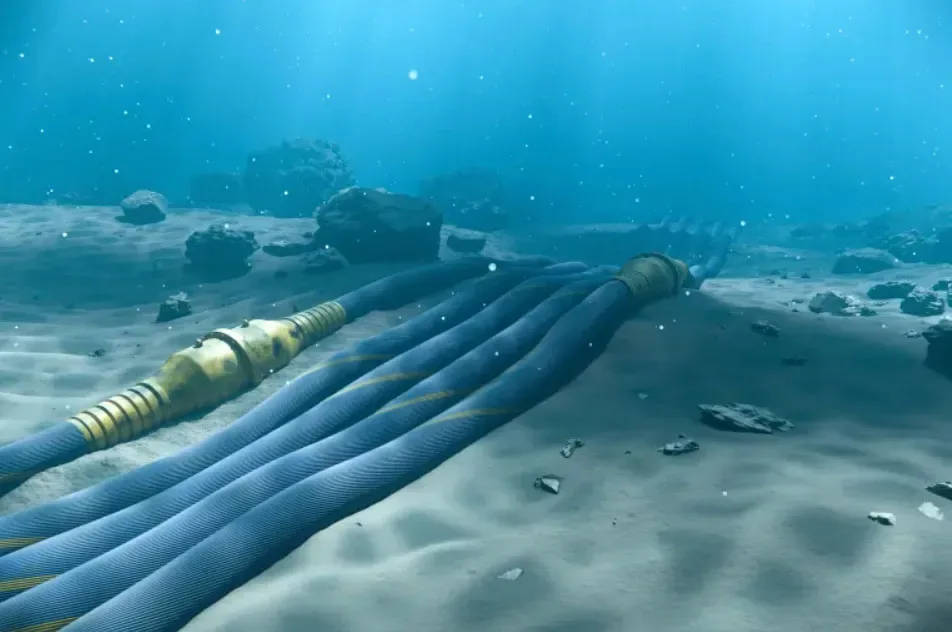
A massive volume of data is transmitted through a limited number of narrow routes. According to estimates by the research firm TeleGeography, over 90 percent of data transmission capacity between Europe and Asia is moved through undersea cables in the Red Sea. These cables enter the sea through the Bab-el-Mandeb Strait, which is about 26 kilometers wide at its narrowest point and is one of the busiest maritime routes connecting Europe to Asia.
Challenges in Protecting Critical Infrastructure
Cables may be cut due to ship anchor strikes or sabotage, and repairs in war zones require permits and security guarantees. Data centers, which support the infrastructure of banking and cloud services, are considered large and fixed targets. "Andreas Krieg," a senior lecturer in security studies at King's College London, emphasized that to completely incapacitate a facility, it is not necessary to destroy the servers themselves. He stated that data centers rely on continuous electricity, cooling systems, and communications.
Krieg also noted that he takes Rezaei's threat seriously but distinguished between Iran's ability to create major disruptions and its ability to "systematically destroy the digital infrastructure of the Gulf." He described the nature of this warning as "essentially deterrent" and stated that this message "is as much directed at Washington as it is at Abu Dhabi, Riyadh, and Doha," giving Gulf governments a reason to prevent another attack from the U.S.
Impacts on Technological Ambitions in the Gulf
Investment in the technology sector continues, but the war has already harmed this sector. Gulf countries have built their post-oil economies on technology. In Abu Dhabi, the Emirati company G42 is building Stargate UAE in collaboration with OpenAI, Nvidia, and others. Additionally, Saudi Arabia's Public Investment Fund has launched Humain, an artificial intelligence company headed by Crown Prince Mohammed bin Salman, to establish data centers and a model of artificial intelligence in Arabic.
Given the existing threats and recent attacks on technology infrastructure, regional governments must pay more attention to strengthening their cybersecurity and digital infrastructure to prevent existing vulnerabilities.
Read more: Ismail Baqai emphasized the need for realistic dialogue about Gulf security · Facilitating the export of fodder corn from Dezful to Gulf countries