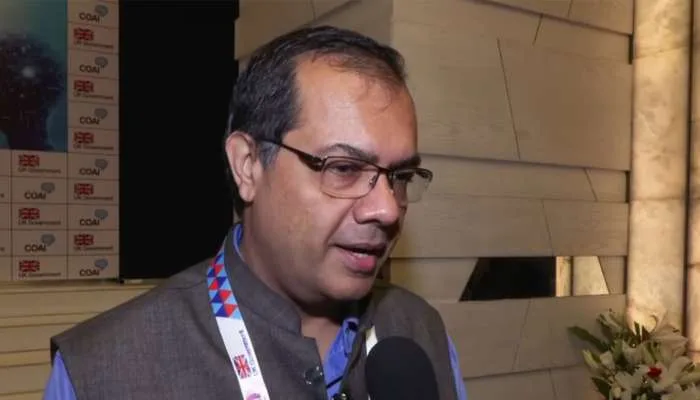
India requires collaboration with other governments to exchange information about cyber threats. Jigit Bhattacharya, the head of the Digital Economy Policy Research Center (C-DEP), raised this issue on Monday at the CO.AI 2026 event organized by the Cellular Operators Association of India (COAI) in collaboration with the British Embassy.
Opportunities and Threats of Artificial Intelligence
Bhattacharya addressed the increasing use of artificial intelligence (AI) and stated that this technology creates both opportunities for telecommunications networks and poses threats. He explained that AI can help protect telecommunications networks from spam and make the process of 'repairing' these networks more efficient. However, the same technology is also used to identify vulnerabilities in networks and attack them on a large scale.
Read more: Skyworks rises 9.8% following the $22 billion merger with Qorvo
He referred to past experiences, including the Sindoor operation, and added: 'How can we prevent AI-based attacks? What actions need to be taken in terms of regulation, technology, and collaboration between industry, academia, and governments?'
Cybersecurity Challenges and Government Approach
Bhattacharya emphasized that the increasing complexity of cyber threats indicates that cybersecurity cannot be managed through a single policy, especially considering the growing role of AI in this area. He referred to the government's approach to regulating cybersecurity and stated that maintaining a balance between protecting critical systems and infrastructure, people, and preventing barriers for industry is of utmost importance.
He added: 'Excessive government intervention can act as a dampener on the industry and also disrupt innovation, which is something the government does not want.' Bhattacharya stressed that the government is carefully examining what level of regulation can protect systems, critical infrastructure, and people without stifling innovation and industry.
He also noted that India is leading in the Global South and bringing together various countries to discuss critical issues, including artificial intelligence, without claiming technological superiority over other countries.
Strengthening AI Capabilities in India
Bhattacharya pointed to the importance of ongoing discussions about artificial intelligence, stating that this technology has become a very critical topic due to its rapid advancement. He also noted that even countries that are leaders in AI are seeking to slow down the development process.
He continued to mention the actions needed to strengthen AI capabilities in India, stating that regulation alone is not a tool for becoming a leader in technology. Instead, the focus should be on creating the necessary conditions for the development and adoption of AI.
Bhattacharya said: 'The government is working to increase access to data for training models, promoting individuals capable of providing global models, and creating a marketplace for solution providers.' These actions will help strengthen the ecosystem of AI models and solutions while ensuring that this technology is used for the right purposes and does not harm people or critical systems.
Read more: Axon wins the field: outpacing Palantir in the 100 Roundtable list · CPI inflation rate in India reached 4.82% in August