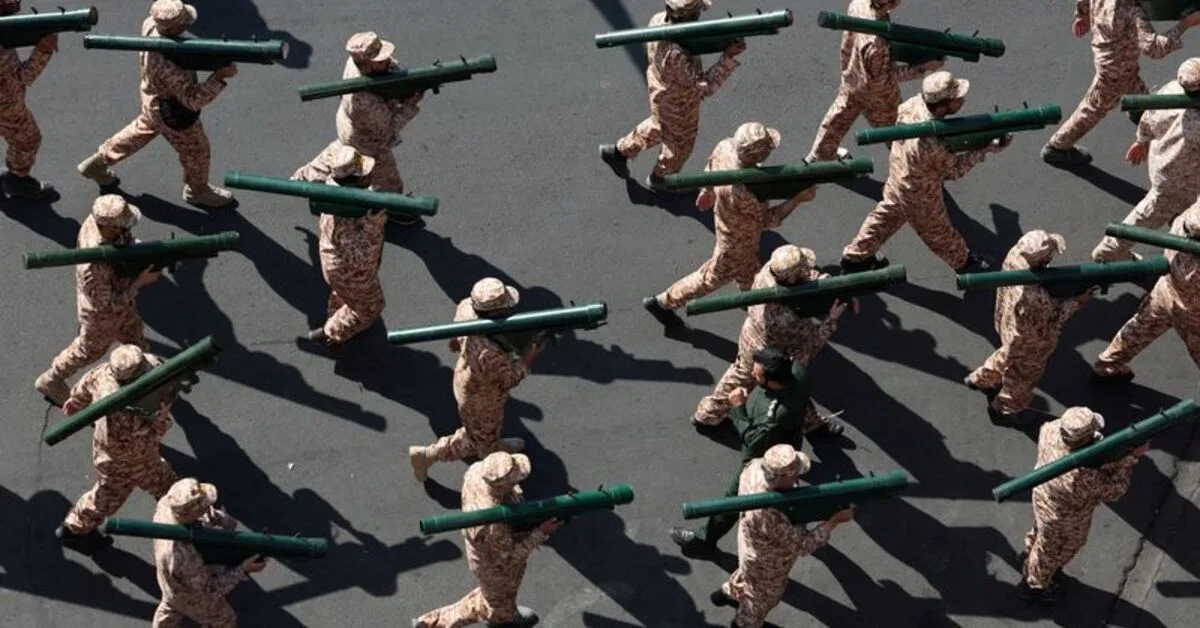
On Sunday, Iran warned against any major attack from the United States and its allies, announcing that it has information regarding readiness for such a move. This warning comes as the Persian Gulf region is under pressure due to drone and missile attacks on Saudi Arabia.
Iran's Retaliation Against Threats
The General Staff of the Armed Forces of Iran announced in state media that any new attack would result in significant reprisals against U.S. bases and interests, with Washington's regional allies also considered parties involved in this conflict. The information Iran referred to concerns a potential attack by the United States, but no further details were provided.
U.S. State Department Warning
The U.S. State Department issued a security warning on Saturday, stating that there is a possibility of a sudden escalation in the Middle East, and American citizens should exercise increased caution and be aware of the potential for flight cancellations and airspace closures.
Nearly seven months into the U.S.-Iran war, neither side has shown signs of readiness to make significant concessions to end the conflicts. While global energy markets are currently under pressure, this conflict has spilled over into crisis trends in other parts of the region as well.
On Saturday, Iranian-backed Houthis, who have made significant advances on the Red Sea coast of Yemen, announced that they had launched attacks on the capital of Saudi Arabia, Riyadh, as well as a major oil facility in the port of Yanbu. Videos from Reuters show large plumes of black smoke rising from the area of Riyadh International Airport.
Saudi Arabia has not responded to this incident and the Houthi claims, although the Saudi-led coalition claimed to have thwarted other attacks aimed at their country. The U.S. State Department's warning refers to Houthi hostilities against Saudi Arabia, including civilian airports.
Given the recent gains of the Houthis along the Yemeni coasts, the group now monitors the Bab al-Mandab Strait, giving them greater control over maritime transport between the Red Sea and Asia, which could lead to the closure of this vital waterway.
Iran has also stated that it will not open the Strait of Hormuz until the conditions of the June interim agreement, as it interprets them, are met. Mohammad Baqer Qalibaf, the Speaker of the Iranian Parliament, said that his country must continue to fight and negotiate to push back its enemies and strengthen any progress through diplomacy.
Read more: U.S. Allows Iranian Officials to Attend UN General Assembly · Postponement of Salalah Meeting; Challenges in Iran-Arab Relations