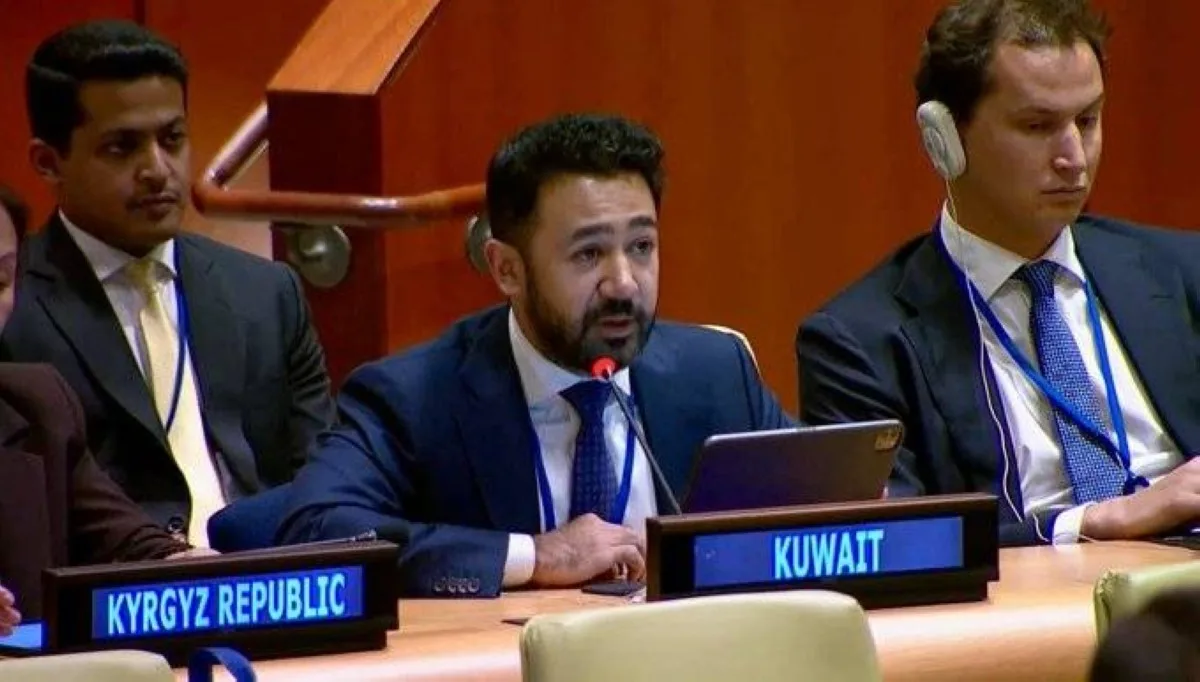
Kuwait emphasized the importance of respecting the national sovereignty of countries and paying attention to domestic experiences in the process of formulating and developing international law. Jasem Al-Omari, the Second Secretary of Kuwait's Permanent Mission to the United Nations, raised this issue during the Sixth Committee of the United Nations General Assembly, which is dedicated to legal matters, while reviewing the report of the International Law Commission in sessions 76 and 77.
Emphasis on Detailed Analysis of National Experiences
Al-Omari stated that the work of the Commission should be based on a detailed analysis of national experiences and relevant legal evidence, referring to the strengthening of legal certainty and the sovereignty of international law. He emphasized the value of the Commission's work and called for constructive interaction between the Commission and the Sixth Committee. He also stated that the opinions of different countries and national experiences should be taken seriously.
Read more: Dialogue between the Foreign Minister of Oman and his Liberian counterpart on bilateral cooperation
Separation of the Formulation and Development of International Law Rules
Al-Omari emphasized the distinction between the formulation of existing international law rules and proposals for their development, stating that the Commission should not prejudge the positions of different countries regarding the legal nature or effects of its results and drafts. This point is particularly important in the context of challenges arising from rising sea levels, which pose serious environmental and economic problems for coastal and island countries.
He also emphasized the need for continuous international cooperation to address climate change and mitigate its impacts. He referred to the pursuit of political commitments outlined in the declaration regarding rising sea levels, which was adopted during the high-level week of the 81st General Assembly, stating that these discussions should be based on relevant international law rules, especially the United Nations Convention on the Law of the Sea.
Diversity of National Legal Systems
In the context of general legal principles, Al-Omari called for attention to the diversity of national legal systems. He emphasized the necessity of precision in identifying principles arising from these systems and distinguishing them from principles that may arise within the framework of international law. He also spoke of caution in determining the conditions for recognizing these principles and their scope without undermining other sources of international law.
Al-Omari, while expressing appreciation for the work of the Commission, emphasized the importance of continuing dialogue with member states. These collaborations can help strengthen the principles of international law and create a suitable environment for the exchange of views and international experiences.
Read more: Denial of Houthi Airstrike on Saudi Arabia · Nawaf Al-Ghareeba, Kuwaiti Composer, Enchanted Audiences with His Symphonic Concert