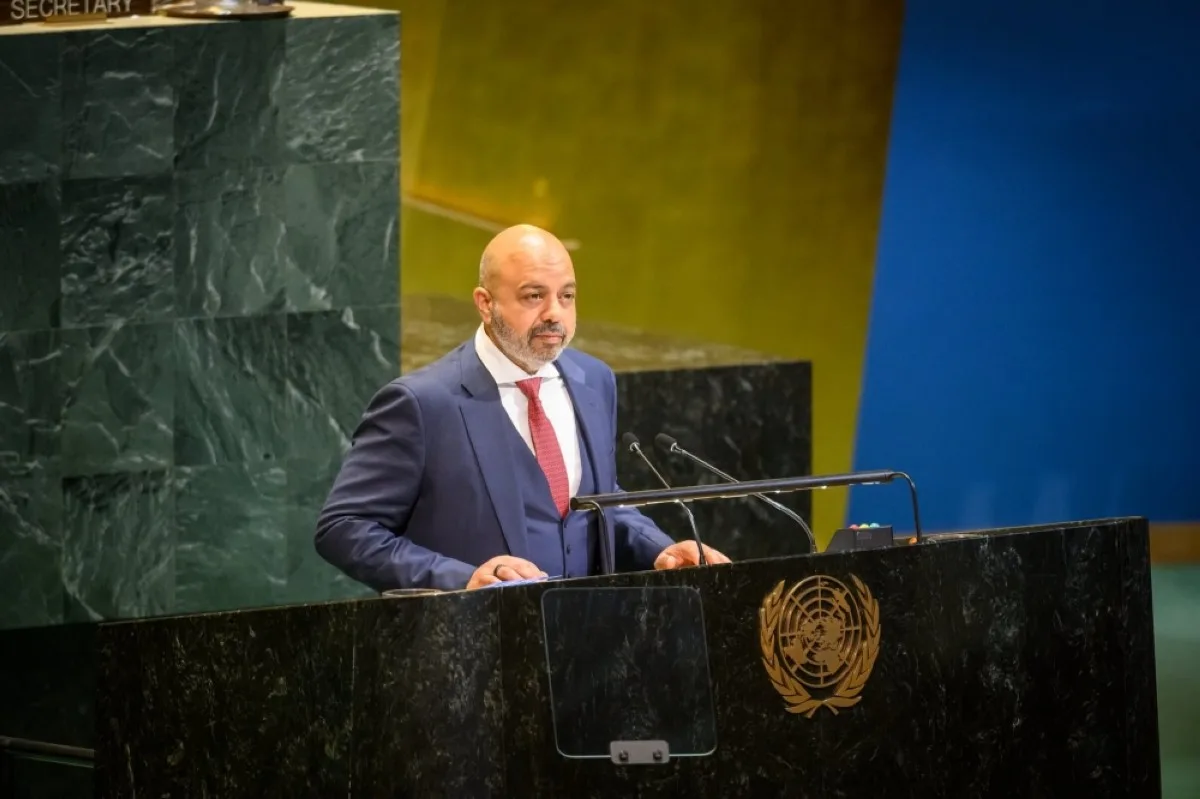
Kuwait has achieved a significant milestone by securing the support of 111 countries for a draft resolution concerning the annual report of the International Atomic Energy Agency (IAEA). This draft, regarded as an unprecedented achievement in line with the agency's role in ensuring peace, security, and international development, was presented to the United Nations General Assembly on Friday. Kuwait, serving as the chair of the agency's board for the 2026-2027 term, has put forth this draft.
Details of the Resolution and International Support
Kuwait's Permanent Representative to the United Nations, Tareq Al-Banai, stated that this resolution is based on the statute of the International Atomic Energy Agency and the 1957 agreement between this agency and the United Nations. He emphasized that the review of the agency's annual report provides an opportunity for the General Assembly to reaffirm its support for the agency's role in ensuring international peace and security, as well as its efforts towards the peaceful use of nuclear science and technology for development.
Read more: Bahrain Government Arrests 60 Shia Clerics
Al-Banai also referred to the updates in this draft, which are based on previous General Assembly resolutions and statements from the President of the 70th regular session of the agency. He noted that one member state has yet to express its opinion regarding the agency's 2025 annual report, which is similar to its previous stance on the 2022 report.
The Need for Reforms in the United Nations
Furthermore, Kuwait called for the United Nations to adhere to its principles consistently and without double standards, emphasizing the necessity of comprehensive reforms to enhance the organization's effectiveness in the face of increasing tensions in the Middle East. Tareq Al-Banai, in a statement on the occasion of United Nations Day on October 24, stressed the need for reforms in the Security Council to provide fairer representation and improve its ability to address contemporary crises.
He highlighted the importance of maintaining balance among the three main pillars of the United Nations – peace and security, development, and human rights – stating that the credibility and effectiveness of this organization depend on the fair and consistent implementation of international principles. Al-Banai also pointed to the ongoing dangers in the Middle East, considering these developments a serious threat to the security and stability of the region and its nations' resources.
He also referenced Iran's attacks against Kuwait and other Gulf countries, stating that these attacks violate the sovereignty and territorial integrity of these nations and damage their security and civilian infrastructure. Al-Banai emphasized the baselessness of any justification for these attacks and called for the full implementation of United Nations Security Council Resolution 2817, which urges Iran to refrain immediately and unconditionally from attacks and provocations against Gulf countries and Jordan.
Read more: Saudi Arabia and New Houthi Attacks on Oil Facilities · Kuwait: Ministry of Health and Tourism Investment Company Reviewed Public Health Collaborations