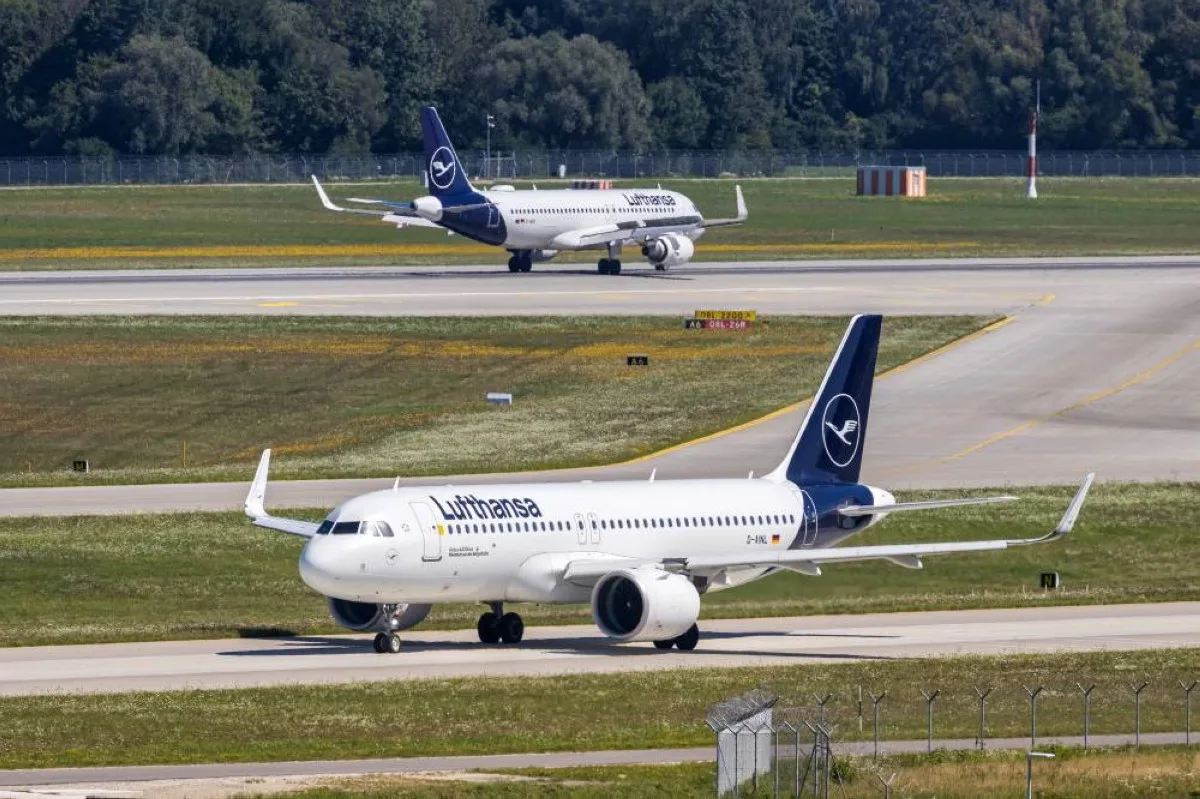
The German airline Lufthansa announced on Tuesday that it expects its fuel costs in 2026 to be 2 billion euros (equivalent to 2.24 billion dollars) higher than last year. This cost increase is due to rising global energy prices resulting from the war in Iran. In its third-quarter results report, the group stated that it now expects total annual fuel costs to reach 9.3 billion euros, which is 600 million euros more than previous forecasts.
Reduced profit forecast
Lufthansa, which also includes the brands Swiss, Brussels, and Eurowings, has slightly lowered its forecast for core profit in 2026, estimating it to be between 1.7 billion and 2 billion euros. The company's previous forecast was between 1.7 billion and 2.2 billion euros. Despite this reduction in forecast, Lufthansa reported a 30 percent increase in its profit for the July to September quarter, exceeding expectations. The company's net profit reached 1.26 billion euros, primarily due to strong demand for luxury tickets to Asia and North America.
Read more: Oman: Details of special industrial clusters for pharmaceuticals and medical equipment announced
Revenue growth and cost challenges
Lufthansa's revenue has increased by 9 percent compared to last year, reaching 12.2 billion euros. However, fuel costs in this quarter have risen by over 500 million euros compared to last year. Til Schreiber, the company's CFO, stated, "We achieved a better result compared to last year, despite high fuel costs impacting the quarterly result by over half a billion euros. We are satisfied with this performance." He added that this success is due to strong demand in passenger transport.
Currently, the war in Iran and its effects on global energy prices pose significant challenges for the airline industry. In particular, airlines are struggling to cope with high fuel costs and price volatility. This situation could lead to substantial changes in business strategies and pricing in the airline industry.
Given the new forecasts, it seems that Lufthansa must prepare itself for a challenging period, as rising costs could have profound impacts on the company's profitability and investment decisions. In this regard, focusing on demand and optimizing costs to maintain competitiveness in the market appears to be vital.
Read more: Reduction in AI and semiconductor costs in South Korea to 21.3 trillion won · The U.S. government addresses its concerns about Cuba following the war in Iran