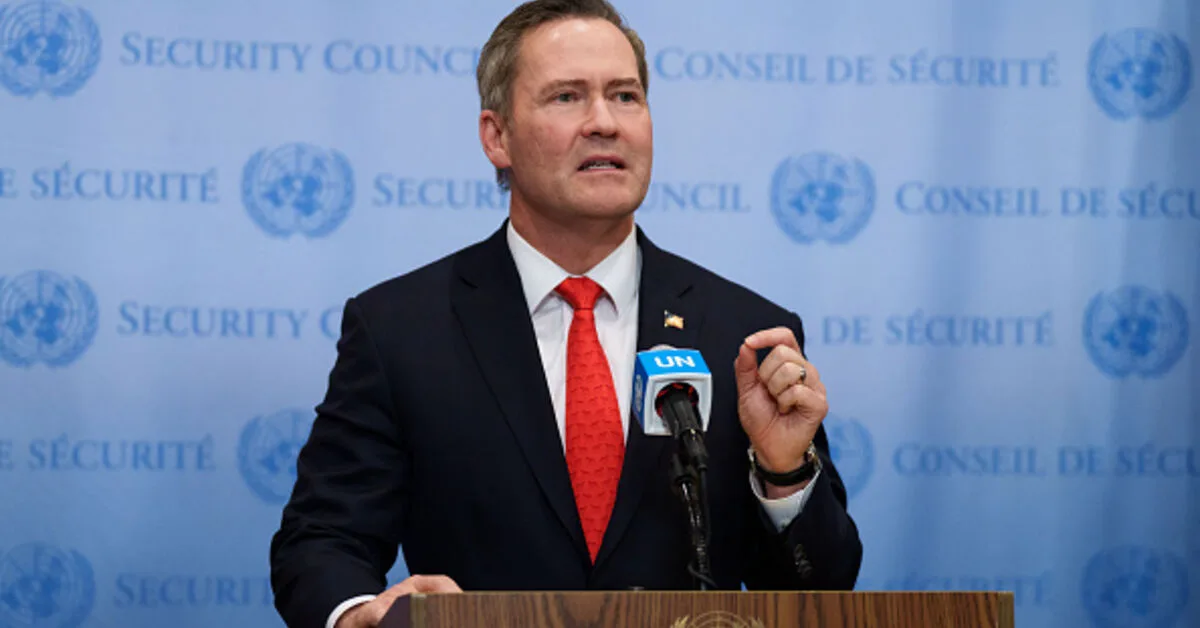
Mike Waltz, the U.S. Permanent Representative to the United Nations, announced on Sunday that "the doors are open for Iran to return to the negotiating table" and believes that the Trump administration has concluded that time is on their side in this conflict.
Analysis of the Situation in Iran and the War with the Country
Waltz defended the management of the war with Iran during a live event in New York, on the sidelines of the UN General Assembly, and referred to the Abraham Accords, which celebrated their sixth anniversary last week. These accords, signed by the United States between Israel and the United Arab Emirates, Morocco, and Bahrain, were registered on September 15, 2020, at the White House.
Read more: Iran's Foreign Minister's visit to China before Xi Jinping's meeting with America
In response to a question about whether the United States believes that time is on their side, Waltz stated: "I believe it is." He also emphasized that "the doors are open for Iran to return to the negotiating table," but dismissed reports claiming that Tehran recently requested the lifting of U.S. sanctions and compensation as conditions for resuming negotiations as "fantastical."
The Economic Situation in Iran and Its Impact on Negotiations
Since the beginning of the war, Iran has faced an effective blockade on the Strait of Hormuz and has conditioned its reopening on the lifting of U.S. sanctions and compensation for war damages. Additionally, recent attacks on Saudi Arabia's energy infrastructure and the seizure of islands near Bab el-Mandeb by the Houthis have given Iran and its allies in the region more leverage.
Waltz continued by stating: "The Iranian regime is at its weakest point since 1979 and is getting weaker by the day." He pointed to the devaluation of the Iranian rial, which has reached a record of over 2.25 million rials against the dollar in the unofficial market, adding that this issue is due to economic pressures from the war, U.S. sanctions, and restrictions on Iran's oil exports.
He also referred to the Trump administration's approach to Gaza as "a new kind of multilateralism" that focuses on specific challenges and brings together countries directly interested in solving them. At the center of this approach is the Trump peace team, which oversees the implementation of Trump's 20-point plan for Gaza.
This team announced a roadmap in July to address one of the difficult challenges of this plan, namely the disarmament of Hamas and other armed groups, while discussions are still ongoing regarding the sequencing of these steps.
Waltz also praised the efforts of Iraqi Prime Minister Ali al-Zaydi to bring Iranian-backed militias under control, stating that the weakened status of Tehran has created opportunities to limit their influence. This effort is a significant test of Baghdad's ability to impose state monopoly over weapons after years in which powerful Iranian-backed groups have maintained their military structures outside the official control of the government.
Al-Zaydi referred to the September 30 deadline for the remaining U.S.-led coalition forces to withdraw, but Iraqi officials have stated that there is no specific deadline for the disarmament of militias, indicating Baghdad's resistance to some of the most powerful Iran-aligned groups.
Read more: Three controversial government bills to strengthen relations with neighbors · Brad Cooper: One billion barrels of oil have passed through the Strait of Hormuz