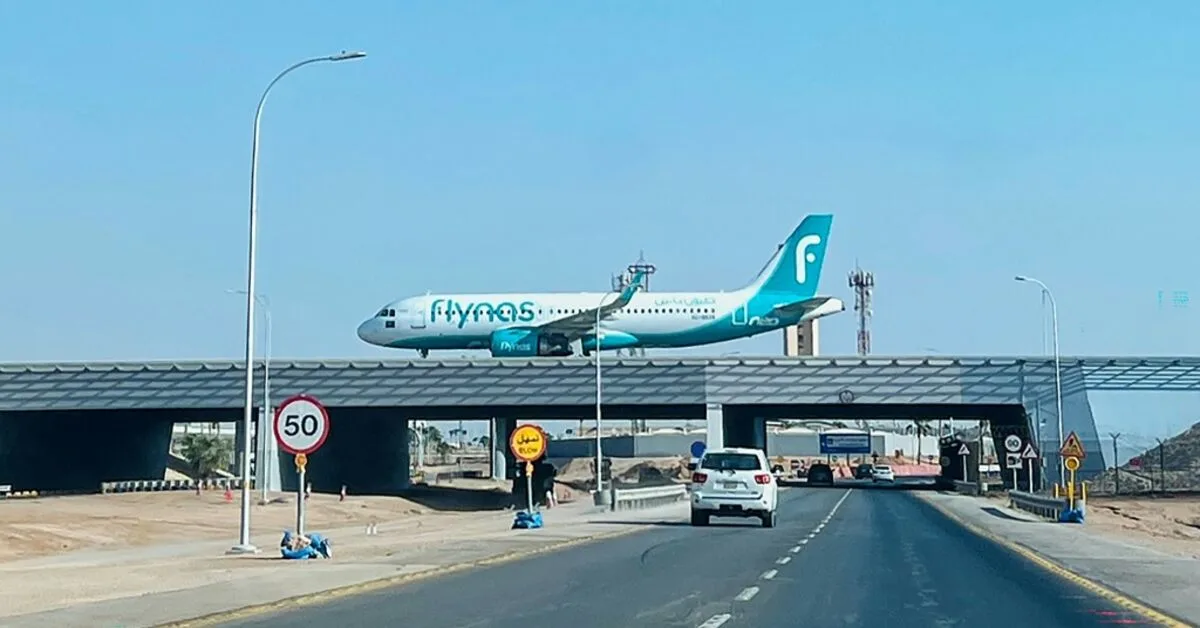
Saudi Arabia has suspended all flights to and from King Khalid International Airport in Riyadh until next Saturday due to new Houthi missile attacks. These attacks not only caused significant damage but also claimed one life. Some airlines, including Gulf Air and Bahrain Air, had already canceled their flights until this date.
Missile Attacks and Their Consequences
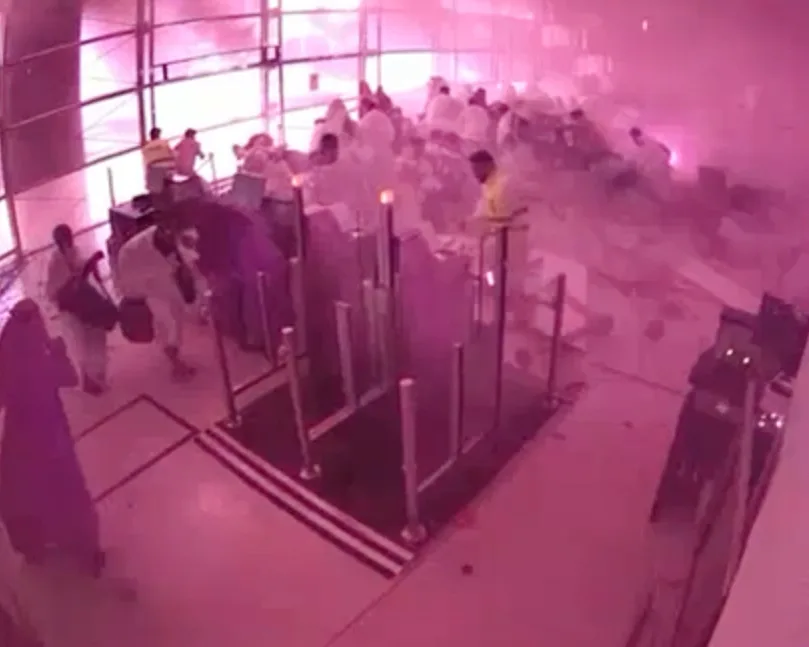
The country announced that flights from Riyadh, the second busiest airport in the country, have been suspended. This decision was made after Houthi missiles killed 13 people and injured over 300 on Saturday. Saudi state television aired footage from security cameras showing passengers caught in smoke and debris while waiting to board their flights as a Houthi missile struck the airport.
Read more: Saudi Arabia: Attack on Riyadh Airport Leaves 12 Dead and Hundreds Injured
Saudi Arabia is seeking to create an image of normalcy by hosting an international energy conference in Riyadh. However, the virtual attendance of some senior oil industry executives and their absence from the conference reflects the repercussions of this crisis.
Statements from the Energy Minister and Upcoming Challenges
Abdulaziz bin Salman, Saudi Arabia's Minister of Energy, stated at the conference that "fear has no place in Saudi culture" and emphasized the resilience of the country's energy system and the people's determination to face crises. Amin Nasser, President and CEO of Aramco, also mentioned that Saudi Arabia has deeply invested in protecting its energy supply, but no country, even one as capable and confident as Saudi Arabia, can protect these resources alone.
He added: "Markets can diversify suppliers, but they cannot diversify geography. When energy infrastructure in this region is targeted, the repercussions reach economies around the world."
Immediate investigations are underway to determine how Houthi missiles are repeatedly breaching Saudi Arabia's defensive lines. Students and some administrative staff have been advised to work from home. The Houthis have also attacked the city of Khamis Mushait and King Fahd International Airport in Dammam.
There is a pressing need for interceptor missiles to protect government buildings, oil facilities, and infrastructure hubs across a vast area. The Houthis have stated that they will continue their attacks on airports throughout Saudi Arabia.
Houthi attacks since last month have included targeting fuel tanks at Riyadh Airport and its associated warehouses, resulting in the destruction of an Airbus A320 passenger plane and damage to at least five other aircraft.
Mohammed bin Salman, the Crown Prince of Saudi Arabia, has not been seen in public since last Tuesday, indicating the pressure he is under to find a solution to a war that has overshadowed his leadership since 2014. Saudi Arabia desperately needs stability to continue diversifying its economy away from oil dependence, yet it has yet to find a way to restore stability in Yemen.
Inside Yemen, clashes continue in and around the city of Taiz, the country's third-largest city and most populous province, while Saudi aircraft have conducted eight separate attacks on any gathering of Houthi forces. Up to 60 fighters from both sides lost their lives on Sunday.
The governor of Taiz, Nabil Shamsan, issued an urgent call on Sunday for an end to the Houthi siege, warning that a shortage of medicine will soon lead to a decline in emergency medical and surgical services in the city.
Overall, the Houthis claimed that Saudi Arabia conducted 124 airstrikes on Sunday. The Saudis are trying to identify Abdul-Malik al-Houthi, the elusive Houthi leader, amid ongoing rumors of his assassination, but Saudi Arabia appears to lack contemporary information about his exact location in the capital Sana'a or at his base in Saada.
On the diplomatic front, Abbas Araghchi, Iran's Foreign Minister, spoke on Sunday with Faisal bin Farhan, Saudi Arabia's Foreign Minister, to see if there is a way for Iran to act as a mediator between the Saudis and the Houthis. Mohammed al-Bukhaiti, a member of the Houthi political office, claimed that Saudi Arabia accepted Iran's mediation proposal and initially offered a one-month ceasefire followed by a two-week ceasefire, but the Houthis rejected both proposals.
He stated: "This struggle is not like previous ones; the arena is no longer the same, and the cards have changed. Therefore, a comprehensive agreement must be established between Riyadh and Sana'a, the Houthi capital, because every day that passes in this struggle expands its scope and deepens its damages, and an agreement that may be possible today will be difficult or impossible tomorrow."
The UN Security Council meeting in New York is expected to discuss a resolution designating the Houthis as a foreign terrorist organization on Tuesday.
The head of the Southern Transitional Council (STC), Aidarous al-Zubaidi, called for southern forces to continue fighting on all fronts, not just to defend the borders of former South Yemen, a move that is likely to be welcomed by Saudi Arabia as it supports last week's UN-recognized government's call to drive the Houthis out of all of Yemen.
The STC envisions an independent South Yemen that re-establishes the separate government that existed from 1967 to 1990. The unification of Yemen was fragile at the end of the Cold War, and many southerners have long-standing grievances regarding the distribution of resources in the unified government.
The authority of the STC faces challenges from Abdulrahman al-Mahrami, a Salafi leader who commands the powerful Southern Giants brigades.
Despite Iraqi efforts to communicate with the Saudis, Mohsen Rezaei, the hardline secretary of Iran's Supreme National Security Council, claimed that Iran attacks five or six small boats in the Strait of Hormuz every night.
Read more: New Attacks on Riyadh Airport; One Dead and Nearly Twelve Injured · Canelo Alvarez Continues to Fight in Riyadh