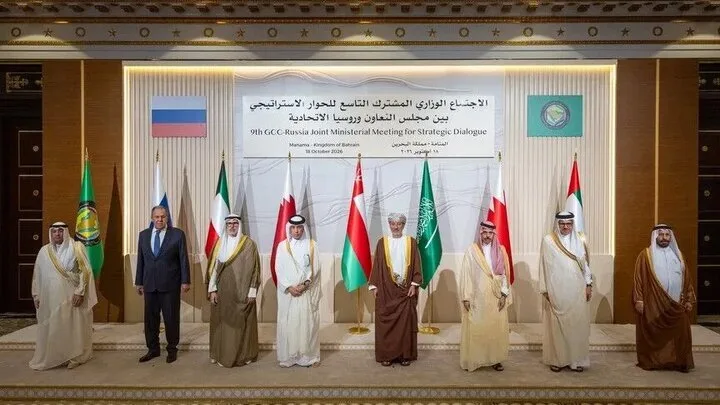
The Gulf Cooperation Council countries, in their meeting in Manama, called for the Islamic Republic of Iran and the United States of America to return to dialogue. The foreign ministers of the member countries of this council emphasized the necessity of diplomacy and dialogue to overcome the current crisis between the U.S. and Iran in the final statement of their 168th meeting, chaired by Abdullatif Al-Zayani, the foreign minister of Bahrain, and attended by Sergey Lavrov, the foreign minister of Russia.
Emphasis on Mediating Cooperation
The statement announced that the member countries of the Gulf Cooperation Council support regional and international mediating efforts to achieve a political solution. The ministers also emphasized the importance of maintaining regional security and stability and ensuring the safety of the people. They called for addressing unresolved issues, including Iran's nuclear program, missiles, drones, and support for Tehran's allied groups, and stressed the need to respect the sovereignty of countries and refrain from interfering in their internal affairs.
Read more: Sergey Lavrov: A diplomatic solution is the only way to reduce tensions in the Gulf
The Necessity of Ensuring Maritime Security
The foreign ministers of the Gulf Cooperation Council emphasized that member countries must participate in any negotiations or arrangements that affect their security and interests. The statement also highlighted the necessity of restoring security and freedom of navigation and returning the conditions of the Strait of Hormuz to the status before February 28, 2026, and noted that this action must be in accordance with international law and respect the sovereignty of coastal countries and the rights of relevant countries.
The foreign ministers of the Gulf Cooperation Council countries also deemed it essential to guarantee freedom of navigation in the Strait of Hormuz, Bab-el-Mandeb, and the Red Sea, describing these routes as vital passages for global trade and energy supply. The statement also condemned Iran's missile and drone attacks against the member countries of the council and Jordan.
While the damages inflicted on Iran due to U.S. attacks, many of which were carried out from the territory of Gulf countries, are estimated to be up to $270 billion, the foreign ministers of these countries urged the Security Council to compel Iran to compensate for the damages caused by its military responses.
Read more: Sergey Lavrov: The coastal countries of the Gulf must be decision-makers in the security of this region · The Gulf Cooperation Council condemned the Houthi attacks on Saudi Arabia