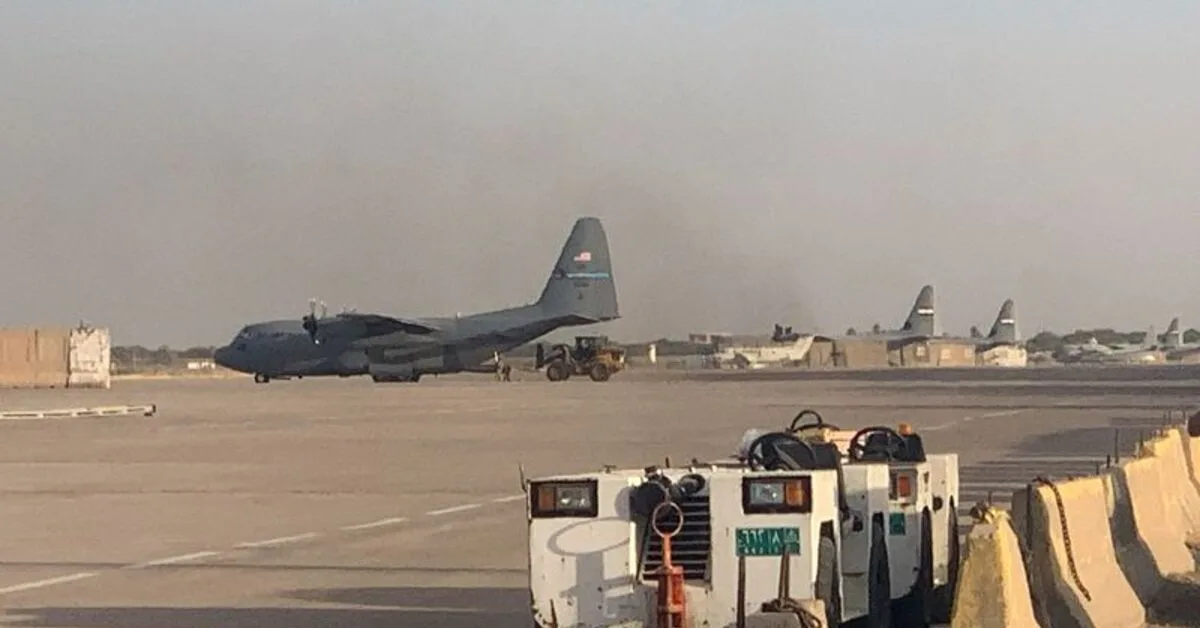
American forces exited their last bases in Iraq on Wednesday, raising concerns about the creation of a security vacuum and the strengthening of Iran-affiliated militia groups and the terrorist group ISIS.
History of U.S. Military Presence in Iraq
The withdrawal of troops, celebrated as a victory for Tehran and its allies, was agreed upon in 2024 under the presidency of Joe Biden and implemented by the administration of Donald Trump. This comes as the United States continues to be at war with Iran, a country that has expanded its influence in Iraq through proxy forces.
This event occurs 23 years after the overthrow of Saddam Hussein, the former dictator of Iraq, by U.S.-led forces, which led to chaos and turmoil in the country and ultimately the emergence of ISIS.
Concerns Over the Security Implications of U.S. Troop Withdrawal
While the withdrawal of American forces is generally popular among Iraqis, some are concerned that the security forces trained and funded by the United States may still be unable to protect the country. Jassim Al-Bahdli, an Iraqi analyst, stated, "The lesson of the past two decades is that security vacuums can be very dangerous."
American forces invaded Iraq in 2003 and subsequently occupied the country, establishing a government led by Shiites and engaging in a prolonged counterinsurgency against supporters of Saddam and later against al-Qaeda. They withdrew from Iraq by the end of 2011 and returned less than three years later to assist Iraqi forces in the fight against ISIS.
Some Iraqi security officials, both in the federal government and in the autonomous Kurdistan region, believe that the withdrawal of American forces could also provide new opportunities for ISIS to operate. Despite the defeat of their self-proclaimed caliphate nearly a decade ago, the group still maintains a network of sleeper cells.
This is while American forces provided vital intelligence on ISIS movements, aerial surveillance, and reconnaissance to Iraqi security forces.
Retired General Mohammed Al-Jabouri, who led a brigade in the war against ISIS, said, "The important question now is whether Iraqi security institutions have prepared a valid Plan B for the post-coalition withdrawal phase?" He also stated that one of the worst-case scenarios could be the provision of armed drones or explosive drones by ISIS, while Iraq still lacks adequate air defense capabilities to counter such threats.
Read more: Ali Qaimmaqami's Analysis on the Mecca Agreement and Gaza · The Withdrawal of American Forces from Iraq After 12 Years of Cooperation