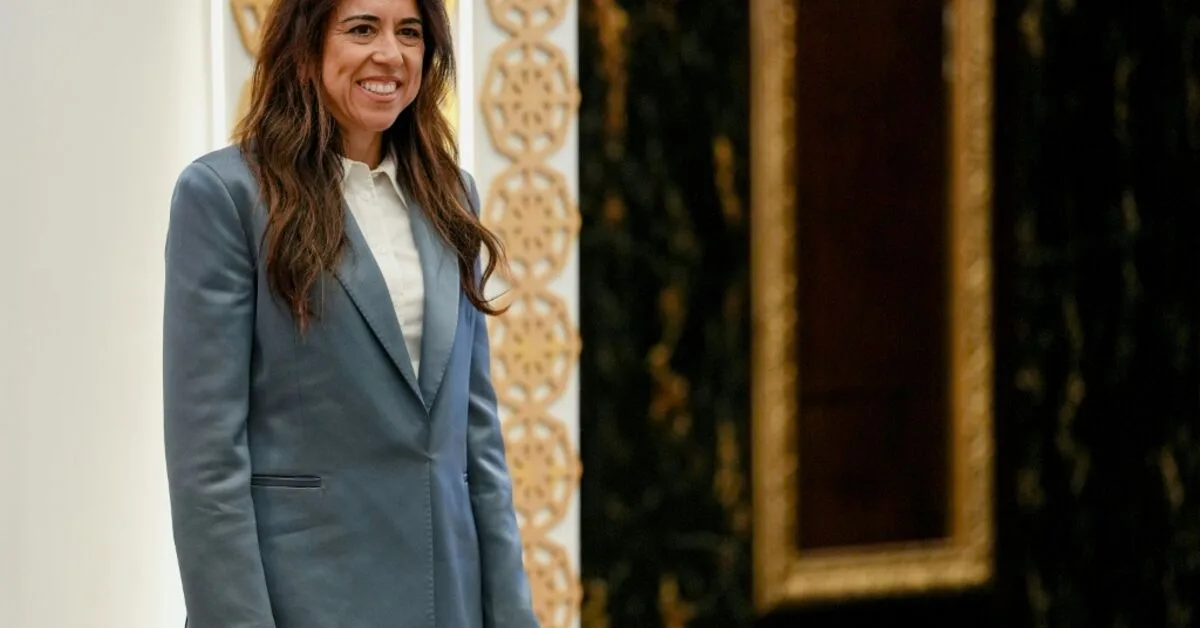
The United Arab Emirates introduced Lana Nusseibeh, its Foreign Minister, as a candidate for the leadership of the United Nations on Wednesday. This action occurs at a time when none of the six candidates currently in the race have been identified as frontrunners.
Lana Nusseibeh's Concerns
Lana Nusseibeh stated in a statement: "I stand for the position of Secretary-General because I believe this is a time for action with greater urgency: to act sooner, to bring people together in various places, and to advance work until tangible results are achieved."
Read more: Kuwait and UNICEF Sign $500,000 Aid Agreements for Gaza
In the latest unofficial poll conducted last week to assess the candidates' chances of being elected as Secretary-General of the United Nations, each candidate faced effective veto power. Five of the 15 members of the UN Security Council have veto power and can reject any candidate they find unacceptable. This occurred on Friday when all seven candidates received at least two vetoes.
Competition Status and Candidates
One candidate, Maki Sal from Senegal, subsequently withdrew from the competition. Currently, Rebecca Grynspan from Costa Rica is recognized as the frontrunner alongside Carolyn Rodrigues-Birkett, former Foreign Minister of Guyana, in this race. Additionally, Rafael Grossi from Argentina, the current head of the UN nuclear oversight body, Iván A-Bagui from Ecuador, María Fernanda Espinosa, and Olara Otunnu from Uganda are also in the competition.
Antonio Guterres, the current Secretary-General of the United Nations from Portugal, will complete his second five-year term on December 31, 2026. Even if a candidate can secure the nine votes needed from the 15 available in the Security Council, they must also avoid vetoes from the five major powers, which are deeply divided.
After overcoming the necessary hurdles, the candidate's name will be submitted to the General Assembly of all UN members for approval. The Security Council's polling was informally designed in the early 1980s to break the deadlock between two candidates who had been rejected due to vetoes. This informal mechanism has continued in various forms despite criticisms from countries that object to this opaque process.
Read more: Steven Butler Emphasizes Friendship and Cooperation Between Kuwait and the USA · United Nations Praises Nobel Peace Prize Winner Navi Pillay