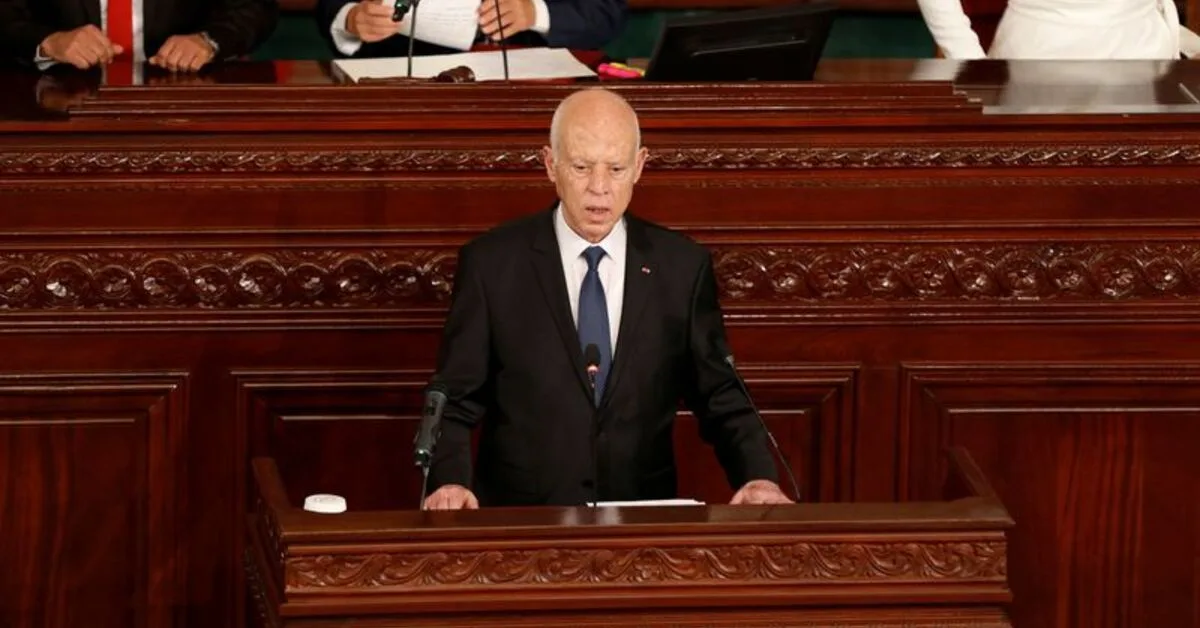
The President of Tunisia, Kais Saied, on Wednesday took an unprecedented step by reducing penalties related to cyber crimes following criticism from human rights groups. This legal change comes at a time when civil groups, particularly the Tunisian General Labour Union (UGTT), have announced plans to hold a national march in protest against restrictions on rights and freedoms.
Changes in Cyber Penalty Laws
According to the reforms made, prison sentences of up to 10 years for certain cyber crimes will be converted to fines ranging from 10,000 to 20,000 Tunisian dinars (equivalent to $3,370 to $6,740) for first offenses. Repeat offenders will also face six months in prison and a fine of 50,000 dinars. Previously, under the old law, offenders targeting public officials could face up to 10 years in prison and fines of up to 100,000 dinars.
Read more: Israeli Settlers Attack Jaloud Village in the West Bank
Criticism and Defense of the Law
This law, passed in 2022, has been heavily criticized by human rights organizations and press freedom advocates in Tunisia and internationally. These groups have described it as a repressive law and claimed it is used to target journalists, activists, and political opponents of Kais Saied. In fact, several journalists and activists have been imprisoned for violating this law.
The Tunisian government, however, has defended this law as a necessary tool to combat cyber crimes, misinformation, and attacks on individuals and public order. Kais Saied has repeatedly emphasized that freedoms in Tunisia are guaranteed and that he will never become a dictator.
Saied gained more powers after suspending parliament in July 2021 and dissolving it in 2022, actions that his opponents have referred to as a coup.
Read more: Three Egyptian Officials Convicted for Kidnapping an Italian Student in Rome · Turkish Court Imprisons 16 People in Izmir for Attacks on LGBTQ+ Groups