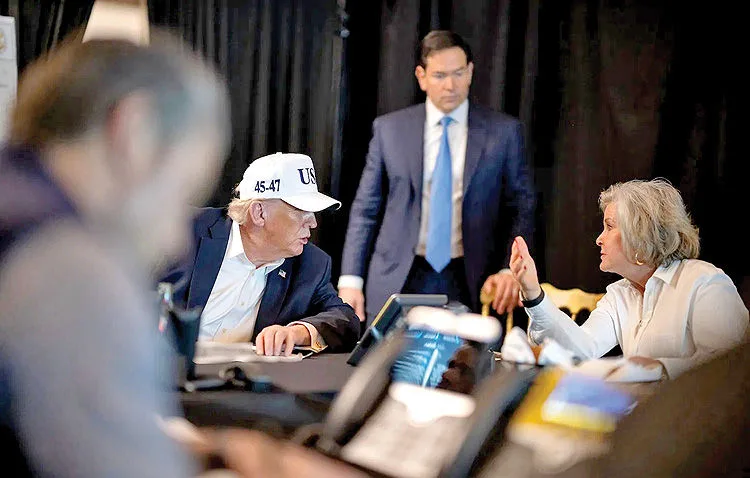
Trump is on the verge of a meeting with the leaders of the six Gulf Cooperation Council countries ahead of the United Nations General Assembly. This meeting comes at a time when these countries are sensitive to their security against Iran on one hand, and on the other hand, are concerned about the expansion of war to their oil and gas infrastructure.
Security Concerns and Negotiation Trends
Axios has reported that Trump previously, in August, backed down from military escalation due to concerns from Saudi Arabia and Qatar about Iran's reaction and the targeting of regional energy facilities. These decisions reflect the impact of security and economic pressures on Trump's decision-making. Nouradine Al-Daghir, a journalist for Al Jazeera, also believes that Trump's statements may have been made with the aim of paving the way for negotiations with Iran.
Read more: Trump's meeting with Arab leaders about Iran
Complexities of War and Domestic Political Consequences
A recent Foreign Policy report indicates that the U.S. and Israel's campaign against Iran has entered its seventh month, with costs during periods of intense fighting estimated at around one billion dollars per day. In this situation, Trump is looking for a way out of this war, while Iran still controls the Strait of Hormuz. This situation complicates Trump's decisions, as a return to war could have serious domestic political repercussions for him in the U.S.
On one hand, the midterm elections on November 3 are approaching, and the continuation of the war, along with high fuel prices and economic issues, has become one of the sensitive topics in domestic politics. Reports indicate that the continuation of the war, coupled with rising gasoline prices and declining popularity for Trump, has put additional pressure on his administration ahead of the elections.
Ultimately, Trump's meeting with the Gulf Cooperation Council leaders holds special significance. If he can manage his Arab allies' concerns about Iran's reaction and the energy market with security guarantees, he will have more room to pressure Tehran.
However, if anti-war opponents in the region are serious, those very allies that Washington needs could become a factor in restraining military options. Therefore, Trump's new threats should not be seen as a definitive sign of a decision to initiate a broader war. The experiences of the past few months have shown that in his strategy, military threats, negotiations, and temporary withdrawals can coexist on the same table.
Read more: China and Iran's Diplomacy in the Gulf Crisis · Iran Demonstrated Its Ability to Push the U.S. Out of the Middle East