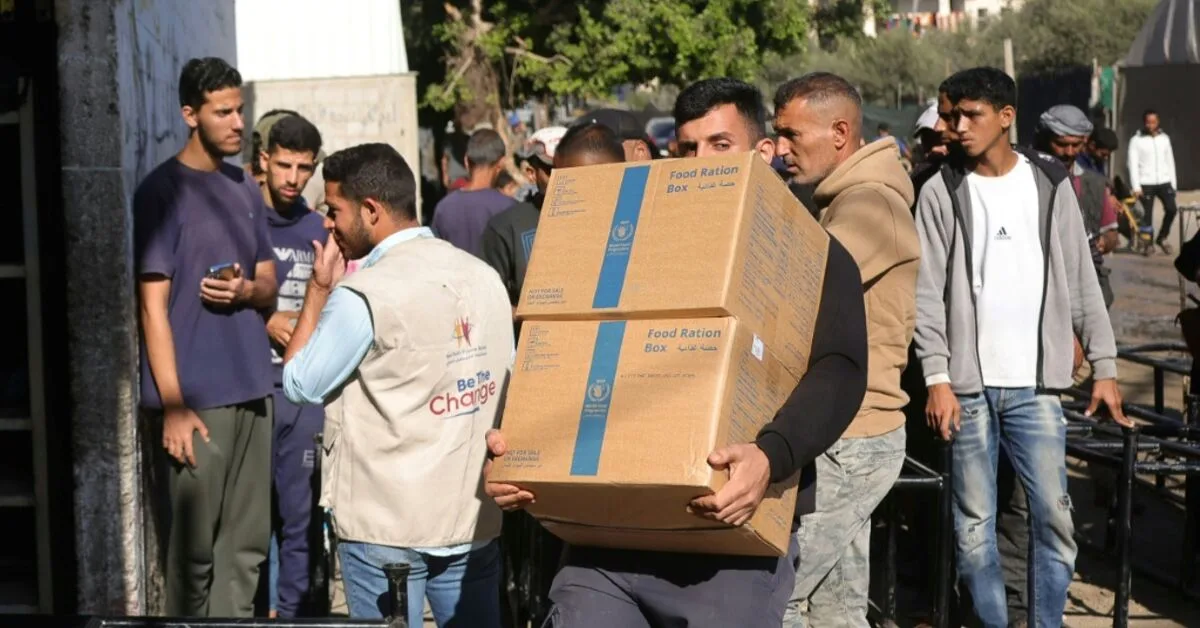
The World Food Program (WFP) announced that due to a lack of financial resources, monthly aid to 500,000 people in Gaza will be halted. This decision comes as humanitarian needs in this Palestinian territory have sharply increased.
Reduction of Aid and Its Consequences
With this reduction, 1.1 million Palestinians in Gaza, who make up nearly half of the population of the region, will receive only smaller amounts of food or cash assistance from this agency each month. The World Food Program has emphasized that its efforts last year helped mitigate the effects of famine, but the situation is such that it cannot completely stop aid.
Read more: The U.S. urged Israel to pressure on Jewish violence in the West Bank
Shawn Hughes, WFP Country Director in Gaza, said at the agency's office in East Jerusalem: "People are not safe, and airstrikes continue daily. Many individuals are still displaced. Almost everyone has been left without permanent housing to live in, and the humanitarian conditions are very poor."
Reduced Wages and Humanitarian Needs in Gaza
According to the latest assessments, 1.4 million people, equivalent to two-thirds of Gaza's population, are still "severely food insecure" and need humanitarian assistance for survival. This comes after the UN's food security classification described Gaza as a region in famine conditions last August. However, Israel has denied this claim and labeled it as false.
The famine classification was lifted last December, two months after a ceasefire brokered by the United States was announced. However, Israel has continued its attacks on Gaza since then and has vowed to kill anyone involved in the October 7 attack.
Since the ceasefire, WFP has been able to increase aid and reach between 1.5 to 1.8 million people each month. Hughes stated: "This aid has been a lifeline. But now, instead of being able to maintain and increase this aid, we are forced to reduce it. And this is not because we lack humanitarian access to provide food; rather, it is because we do not have sufficient funding."
In addition to reducing the number of aid recipients, WFP has also had to cut the amount of aid provided. Families receiving food assistance will now receive only one food package instead of two, and the amount of wheat flour has also been reduced. Additionally, 75,000 families receiving cash assistance will see their payments reduced from 1,250 to 750 shekels (equivalent to $400 to $240) per month.
WFP is funded by governments as well as private donors and is currently facing a severe reduction in financial resources. The agency needs approximately $450 million over the next six months to cover its costs in Gaza and the West Bank, while in 2026 it received only half of the usual budget for the Palestinian territories.
Last September, the agency also reduced the number of aid recipients in the West Bank, which has been under Israeli occupation since 1967, from 400,000 to 200,000 people. Hughes emphasized: "Now is not the right time to turn away from what is happening in Gaza."
WFP has stated that conditions in Gaza have improved on average, but has warned that needs may rise again with the onset of winter. Despite allowing some goods into Gaza, Israel has maintained heavy restrictions and blocked shipments deemed to have military applications, including prosthetics.
Read more: Marco Rubio's visit to Uzbekistan amid a crisis in U.S. foreign policy · The Emir of Qatar emphasized the need to return to negotiations